
What's Happening?
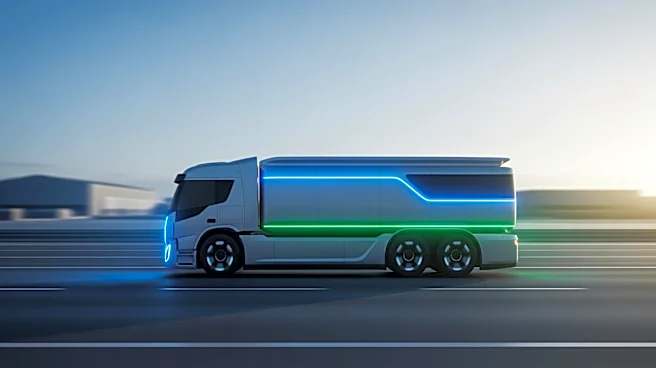
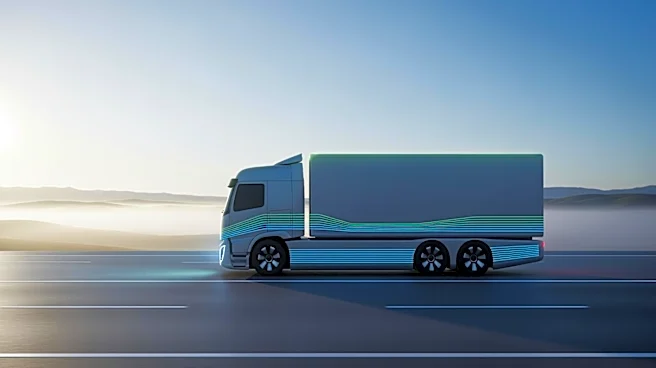
Volvo has started on-road testing of its hydrogen trucks equipped with High Pressure Direct Injection (HDPI) technology. This marks a significant step towards bringing these trucks to market, promising diesel-like performance with low CO2 emissions. The
trucks are categorized as 'Zero Emission Vehicles' under EU standards, aligning with the bloc's goal of a 90% reduction in emissions from heavy goods vehicles by 2040. Volvo is focusing on hydrogen technologies for long-distance journeys, especially in areas with limited charging infrastructure. The company is also developing other low-carbon vehicles, including plug-in electric and fuel cell electric trucks.
Why It's Important?
The introduction of hydrogen trucks by Volvo represents a major advancement in the push for sustainable transportation solutions. As the transportation sector is a significant contributor to global emissions, the development of zero-emission vehicles is crucial for meeting climate targets. Hydrogen trucks offer a viable alternative for long-haul transport, where battery-electric vehicles may face limitations. This initiative could accelerate the transition to cleaner transportation, influencing industry standards and encouraging other manufacturers to invest in hydrogen technology.
What's Next?
Volvo's collaboration with Daimler Truck and Toyota in the cellcentric joint venture aims to develop and commercialize fuel cell systems for heavy goods vehicles. This partnership will focus on creating infrastructure to support hydrogen technology, which is essential for widespread adoption. As testing progresses, Volvo will likely refine its hydrogen truck technology and expand its market presence. The success of these trials could lead to increased investment in hydrogen infrastructure and further collaborations within the automotive industry.