





What's Happening?
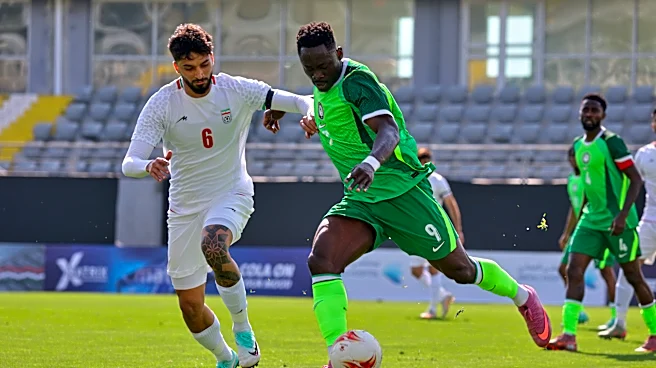
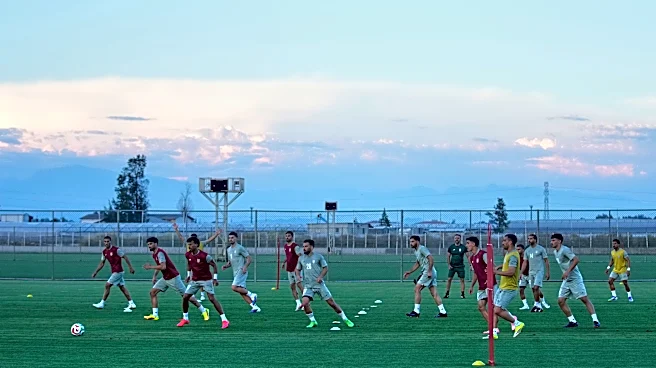
The Iranian national football team has arrived in Tijuana, Mexico, to establish their base for the 2026 World Cup. This move comes after several team staff members, including the head of Iran's football federation, Mehdi Taj, were denied US visas. Originally,
the team planned to stay in Tucson, Arizona, but the visa denials forced a change in plans. Despite the logistical challenges, the team will play all their group matches in the United States, necessitating travel in and out of the country on match days. This situation arises amid ongoing tensions between the US and Iran, marking a unique instance where a host nation is at war with a participating country's team.
Why It's Important?
The visa issues faced by the Iranian team highlight the complex interplay between international sports and geopolitics. The situation underscores the challenges that political tensions can impose on global sporting events, potentially affecting team preparations and performance. For the US, this incident may impact its image as a host nation, raising questions about the intersection of sports and diplomatic relations. The necessity for the Iranian team to travel back and forth for each match could also affect their performance, potentially influencing the outcomes of their games and the overall dynamics of the World Cup.
What's Next?
The Iranian team will need to navigate the logistical challenges of traveling for each match, which could affect their preparation and performance. The situation may prompt discussions among international sports governing bodies about the implications of political tensions on global events. Additionally, the US may face diplomatic scrutiny regarding its visa policies for international sporting events, potentially influencing future decisions on hosting such events.