



What's Happening?
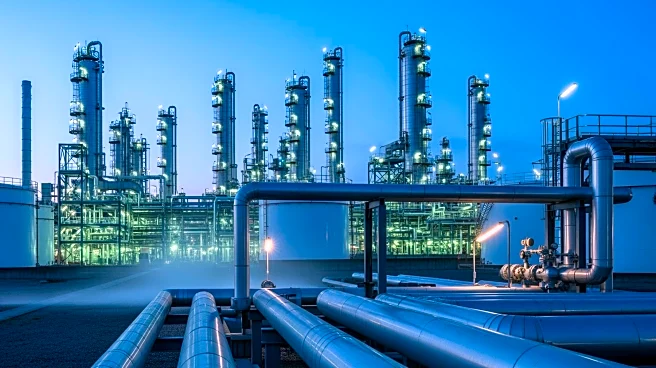
Ineos has announced a €300 million investment, supported by French government grants, aimed at decarbonizing its Lavera site. This initiative is part of the Lavera regeneration plan, which seeks to reduce carbon dioxide emissions by 331,000 tons annually,
equivalent to removing over 70,000 cars from the road each year. The investment is backed by the 'Appel d’Offres Grands Projets Industriels de Décarbonation' (AO GPID) scheme, under the France 2030 investment plan, operated by ADEME. This scheme provides annual grants to support large industrial decarbonization projects that deliver verifiable emissions reductions over a 15-year period. The Lavera site is crucial to French manufacturing, feeding into essential value chains across various sectors such as pharmaceuticals, healthcare, aerospace, transport, clean energy, food packaging, and defense. The investment aims to stabilize employment for around 2,000 direct employees and over 10,000 workers in the wider supply chain.
Why It's Important?
The investment in the Lavera site is significant for several reasons. It addresses the urgent need for decarbonization in the industrial sector, contributing to France's goals of reducing reliance on fossil-based energy. By securing thousands of skilled jobs, the initiative supports economic resilience and industrial strength in France, particularly at a time when chemical plants across Europe face closures due to high energy costs and global competition. Maintaining the capabilities of the Lavera site is vital for France's long-term technological leadership and economic stability, especially as Europe grapples with increasing dependence on imports from China and the United States. The project aligns with broader efforts to transition towards a more sustainable and circular economy, enhancing France's competitiveness in the global market.
What's Next?
The investment marks a significant step towards achieving net-zero emissions at the Lavera site, with plans to incorporate electrification and carbon capture technologies as they mature. The upgrades will enable the Lavera cracker to process more sustainable feedstocks made from recycled plastics and bio-sourced materials, replacing fossil-based inputs. This aligns with French circular economy objectives and positions the Lavera site as a profitable, lower-carbon facility. As the project progresses, it is expected to attract further investments and collaborations, potentially influencing similar initiatives across Europe. Stakeholders, including political leaders and industry experts, will likely monitor the project's impact on emissions reductions and job stability closely.
Beyond the Headlines
The decarbonization of the Lavera site could have broader implications for the chemical industry in Europe. It sets a precedent for other industrial sites to follow suit, potentially leading to a shift in industry standards towards sustainability and circularity. The initiative may also influence policy decisions at the European level, encouraging governments to support similar projects through grants and incentives. Additionally, the focus on sustainable feedstocks and bio-sourced materials could drive innovation in the chemical sector, fostering the development of new technologies and processes that reduce environmental impact. This could ultimately reshape material flows and consumption patterns, contributing to global efforts to combat climate change.