







What's Happening?
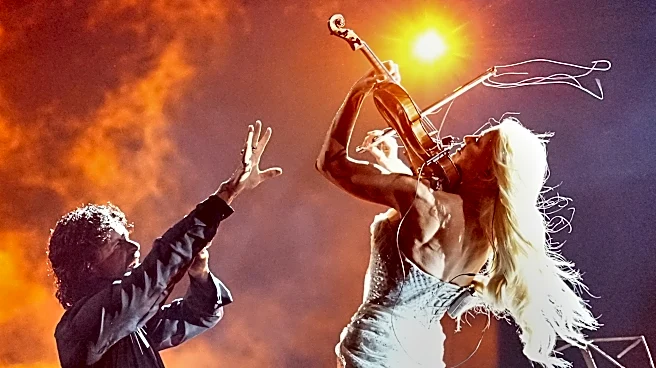
Bulgaria has won the 2026 Eurovision Song Contest with Dara's performance of 'Bangaranga'. This marks Bulgaria's first victory since joining the competition in 2005. The country had not participated in the previous three contests but returned in 2026 as some
countries opted out due to Israel's inclusion. Despite not being a favorite, Dara's song, which she describes as embodying a special energy and the feeling that anything is possible, captured the Crystal Microphone. The song draws inspiration from 'kukeri', an ancient Bulgarian ritual involving men in furry costumes with bells and animal masks. Israel finished second with Noam Bettan's 'Michelle', while Romania, Australia, and Italy rounded out the top five. The United Kingdom finished last among the 25 finalists. As the winner, Bulgaria will host the 2027 Eurovision Song Contest.
Why It's Important?
Bulgaria's victory in the Eurovision Song Contest is significant as it highlights the country's cultural presence on an international stage. Winning Eurovision can boost national pride and cultural tourism, as the host country typically sees increased international attention and economic benefits from hosting the event. The win also underscores the diversity and unpredictability of the contest, where underdog entries can triumph. For Bulgaria, hosting the 2027 contest presents an opportunity to showcase its culture and hospitality to a global audience, potentially leading to increased tourism and international partnerships. The contest's outcome also reflects the geopolitical dynamics within Europe, as participation and voting can be influenced by political relationships.
What's Next?
With Bulgaria set to host the 2027 Eurovision Song Contest, preparations will likely begin to ensure the event's success. This includes selecting a suitable venue, organizing logistics, and promoting the event to attract international visitors. The Bulgarian government and local businesses may collaborate to maximize the economic and cultural benefits of hosting. Additionally, other countries will start preparing their entries for the next contest, aiming to capture the public's imagination and secure a win. The Eurovision community will also continue to discuss the implications of Israel's participation and the contest's role in fostering cultural exchange amid political tensions.