






What's Happening?
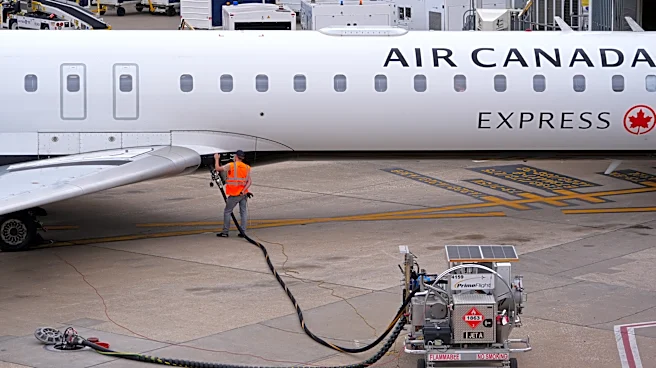
Air Canada has announced the suspension of its flights to New York's JFK International Airport for five months, citing soaring jet fuel costs as the primary reason. The suspension will begin on June 1 and is expected to last until October 25. The airline
will continue its services to other New York metropolitan area airports, including LaGuardia and Newark. The decision comes as jet fuel prices have doubled since the onset of the conflict in Iran, making certain routes economically unviable. The average price for a gallon of jet fuel has risen to $4.32, up from $2.50 before the conflict. Air Canada plans to offer alternate travel options to affected customers.
Why It's Important?
The suspension of flights by Air Canada highlights the significant impact of rising jet fuel costs on the airline industry. Fuel and labor are typically the largest expenses for airlines, and the current situation is forcing carriers to make difficult decisions regarding route profitability. This move by Air Canada is indicative of broader challenges faced by airlines globally, as they grapple with increased operational costs. The situation underscores the vulnerability of the airline industry to geopolitical events and energy market fluctuations, which can lead to service reductions and increased costs for consumers.
What's Next?
Air Canada will be reaching out to customers affected by the suspension to provide alternate travel arrangements. Other airlines may follow suit, adjusting their schedules and routes in response to the ongoing fuel price crisis. The industry is likely to see further cost-cutting measures, such as increased baggage fees and reduced services, as airlines attempt to mitigate the financial impact. Stakeholders, including airline executives and policymakers, will need to closely monitor the situation and explore strategies to stabilize fuel costs and ensure sustainable operations.