


What's Happening?
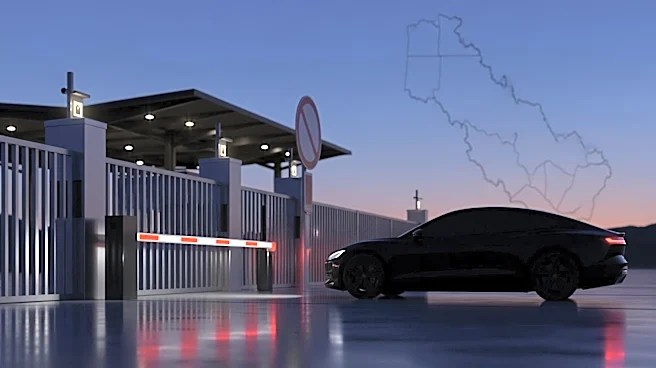
The United States has announced that it will block Chinese-made electric vehicles (EVs) entering Canada from crossing into the U.S. market. This decision, confirmed by U.S. Ambassador to Canada Pete Hoekstra, comes despite Canada's recent move to ease
tariffs on these vehicles. The U.S. stance is driven by national security concerns, particularly regarding data collection and transmission in connected vehicles. This policy aligns with existing restrictions on vehicles using certain Chinese and Russian technologies. The move underscores ongoing tensions in U.S.-China trade relations, particularly in the automotive sector.
Why It's Important?
This decision highlights the U.S. government's focus on national security and its cautious approach to foreign technology. By blocking Chinese EVs, the U.S. aims to protect its market from potential data security threats. This policy could impact U.S.-Canada trade relations, as Canada had recently reduced tariffs on Chinese EVs in exchange for lower tariffs on Canadian agricultural exports to China. The decision may also affect the North American automotive industry, influencing supply chains and market dynamics. It reflects broader geopolitical tensions and the U.S.'s strategic efforts to safeguard its technological infrastructure.
What's Next?
The U.S. will need to outline specific enforcement measures for this policy at the border. Canadian officials and automotive industry stakeholders may seek clarification on the implications for cross-border trade. The decision could prompt discussions between the U.S. and Canada on trade policies and national security concerns. Additionally, the automotive industry may need to adjust its strategies to comply with these new regulations. The policy could also influence future trade negotiations between the U.S., Canada, and China, potentially affecting other sectors beyond the automotive industry.