







What's Happening?
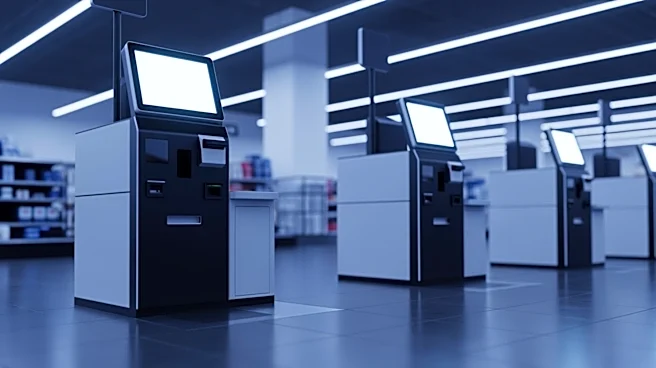
In Connecticut, a proposed bill aimed at limiting self-checkout lanes in stores like Walmart has been shelved after failing to gain sufficient support. The bill would have required retailers to maintain a ratio of one staffed checkout for every two self-service
machines and capped the number of self-checkouts at eight per store. Despite growing pressure to regulate self-checkouts, the plan was abandoned, allowing Walmart to continue its current checkout practices. Industry leaders and some lawmakers argued that the bill was flawed and would negatively impact businesses and consumers. The decision reflects ongoing debates about the role of automation in retail and its implications for employment and customer service.
Why It's Important?
The decision to abandon the bill highlights the complexities of balancing technological advancements with regulatory measures. Self-checkouts have become increasingly popular due to their convenience and cost-effectiveness for retailers. However, they also raise concerns about job displacement and customer service quality. The outcome in Connecticut may influence similar legislative efforts in other states, as stakeholders continue to debate the merits and drawbacks of self-checkout systems. The decision also underscores the challenges lawmakers face in regulating rapidly evolving retail technologies while considering economic and social impacts.
What's Next?
Although the bill was shelved, discussions around self-checkout regulations are likely to continue. Proponents of the bill, like State Sen. Julie Kushner, suggest that efforts to regulate self-checkouts may resurface in future legislative sessions. As the retail industry evolves, stakeholders will need to address the balance between technological innovation and its impact on employment and consumer experiences. Retailers may also explore ways to enhance self-checkout systems to address concerns and improve customer satisfaction.