






What's Happening?
Dolly Parton has emerged as the most favored public figure in a recent poll conducted by the University of Massachusetts and YouGov. The survey, which included opinions from 1,000 Americans, revealed that 70% of respondents have a favorable impression
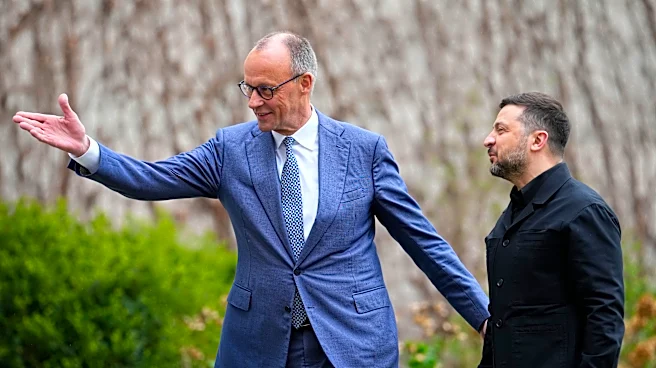
of Parton, resulting in a net favorability of 65%. This places her significantly ahead of other notable figures such as former President Barack Obama, who garnered a net favorability of 14%, and Ukrainian President Volodymyr Zelenskyy, who achieved a 12% net favorability. Parton's popularity is attributed to her extensive musical career, philanthropic efforts, and her apolitical stance, which has helped her maintain a broad fan base across political lines.
Why It's Important?
The poll underscores Dolly Parton's enduring influence and appeal in American culture, highlighting her ability to transcend political divisions. Her philanthropic initiatives, such as the Imagination Library, which has donated over 270 million books to children, and her contributions to medical research, have solidified her reputation as a beloved figure. Parton's high favorability reflects a public desire for figures who prioritize community and charitable work over political engagement. This trend may influence other public figures to adopt similar strategies to enhance their public image and connect with a wider audience.
What's Next?
While the poll results are a snapshot of current public opinion, they may encourage other celebrities and public figures to focus on philanthropy and community engagement as a means to improve their favorability ratings. Parton's approach of remaining apolitical while actively contributing to societal causes could serve as a model for others seeking to enhance their public image. Additionally, the poll results may prompt discussions on the role of celebrities in shaping public opinion and their potential impact on social and political issues.
Beyond the Headlines
Parton's success in the favorability poll highlights the cultural significance of non-political figures in American society. Her ability to maintain popularity across diverse demographics suggests a shift towards valuing contributions to social welfare over political affiliations. This trend may influence the entertainment industry and public figures to prioritize initiatives that foster community support and address societal needs. Furthermore, Parton's philanthropic achievements could inspire increased collaboration between celebrities and charitable organizations, potentially leading to more impactful social change.