
What's Happening?
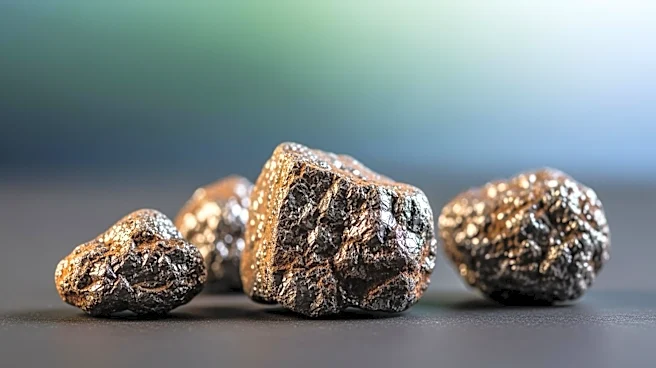
A study published in the Chemical Engineering Journal reveals that iron-rich slag can capture up to 99.5% of carbon dioxide through mineral carbonation, offering a low-energy solution for carbon capture.
This process converts industrial waste into stable carbonates, supporting sustainable mining waste management. The research highlights the potential of using alkaline mining residues, such as steel slags, for carbon sequestration, mimicking natural silicate weathering. The study involved analyzing slag samples from a smelter in Québec, Canada, demonstrating strong carbon capture performance and the formation of stable carbonates.
Why It's Important?
The findings present a promising approach for the mining industry to reduce its carbon footprint and contribute to global decarbonization efforts. By utilizing industrial byproducts for carbon capture, the industry can transform from a major emitter to an active participant in carbon sequestration. This method supports circular economy goals by converting waste into valuable resources, potentially leading to carbon tax credits and improved environmental safety of waste stockpiles. The study's insights could drive the development of scalable, low-energy carbon capture systems, enhancing the sustainability of mining operations.
What's Next?
Further research is needed to assess the long-term stability of carbon sequestration using slag under various environmental conditions. Industry stakeholders may explore the integration of slag-based carbonation into waste management protocols, potentially leading to new business models and partnerships. The mining sector could also investigate the economic viability of this approach, particularly for remote sites, and explore regeneration methods to maximize efficiency. These efforts align with broader goals to achieve net-zero emissions and enhance the environmental performance of mining activities.