








What's Happening?
Colliers' 2026 hospitality outlook anticipates a stable U.S. hotel occupancy rate of 64.1%, with a modest average daily rate (ADR) growth of 1.35%. The upcoming 2026 FIFA World Cup is expected to temporarily boost hotel demand and revenue in host markets.
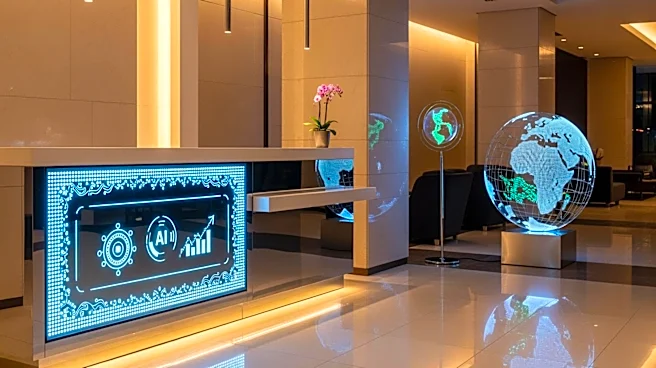
The report highlights a bifurcation in consumer spending, with ultrahigh-net-worth travelers driving performance in luxury and resort markets, while middle-income travelers focus on value. The hospitality sector is also seeing increased adoption of artificial intelligence across operations and revenue management, contributing to a gradual recovery in pricing power. Modular construction and brand expansion are reshaping project economics, while cross-border capital is closely monitoring currency movements and geopolitical events to determine reentry timing.
Why It's Important?
The projected trends in the U.S. hospitality sector are significant as they indicate a gradual recovery from pandemic lows, although occupancy rates remain below pre-COVID peaks. The anticipated boost from the FIFA World Cup could provide a temporary uplift in revenue, highlighting the importance of major events in driving hospitality demand. The adoption of AI in operations and revenue management suggests a shift towards more efficient and data-driven decision-making processes, which could enhance profitability and competitiveness. The bifurcation in consumer spending underscores the need for targeted marketing strategies to cater to both luxury and value-seeking travelers. Additionally, the focus on modular construction and brand expansion reflects evolving development strategies aimed at optimizing costs and enhancing market presence.
What's Next?
As the hospitality sector continues to recover, stakeholders will likely focus on leveraging AI technologies to improve operational efficiencies and revenue management. The upcoming FIFA World Cup presents an opportunity for hotels to capitalize on increased demand, although this may be a temporary boost. Investors and developers may continue to explore modular construction and brand expansion as strategies to adapt to changing market dynamics. Cross-border capital will remain vigilant, assessing geopolitical developments and currency fluctuations to identify optimal reentry points. The sector's ability to navigate these challenges and opportunities will be crucial in achieving sustained growth and resilience.