



What's Happening?
The cell and gene therapy (CGT) sector is increasingly adopting new technologies to improve manufacturing efficiency and consistency. Historically, CGT manufacturing relied on manual processes and technologies borrowed from biologics manufacturing, which
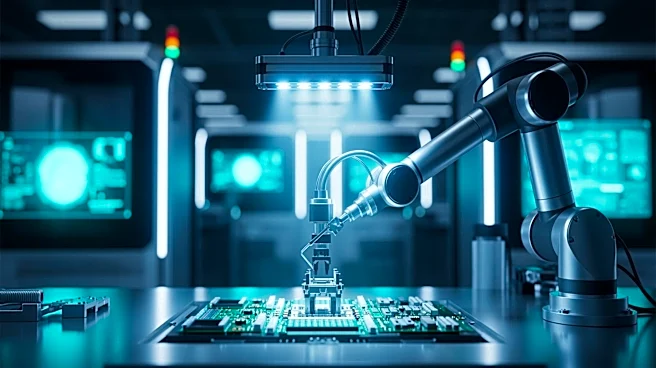
were not designed for patient-specific therapies. This has led to fragmented and operator-dependent production processes. However, the industry is now shifting towards 'CGT 4.0,' which applies Industry 4.0 principles to cell therapy manufacturing. This shift aims to create scalable and repeatable manufacturing processes that can support broader patient access. Key innovations include automation, closed-system processing, and digital integration, which enhance reproducibility, reduce contamination risks, and lower costs. Data plays a crucial role in this transformation, with digital technologies providing infrastructure for gathering and analyzing process information. Companies are investing in integrated digital architectures and cloud infrastructure to maintain data integrity and visibility across multiple facilities.
Why It's Important?
The adoption of new technologies in the CGT sector is significant as it addresses the challenges of scalability, consistency, and cost-effectiveness in manufacturing. By moving away from manual processes, the industry can better meet the demands of commercialization and broader patient access. This transformation is crucial for maintaining competitiveness and ensuring the sustainability of CGT manufacturing. The integration of digital technologies and data-driven approaches enhances the ability to monitor and control manufacturing processes in real-time, leading to improved product quality and compliance. This shift not only benefits manufacturers by reducing costs and increasing efficiency but also has the potential to improve patient outcomes by ensuring the availability of high-quality therapies.
What's Next?
As the CGT sector continues to embrace new technologies, further advancements in automation and digital integration are expected. Manufacturers will likely continue to invest in cloud-based platforms and interoperable software to enhance data management and process control. The focus on maintaining chain-of-identity and chain-of-custody for patient-specific therapies will drive the development of more sophisticated tracking and analytics systems. Additionally, the industry may see increased collaboration between technology providers and CGT manufacturers to develop tailored solutions that address specific manufacturing challenges. Regulatory bodies may also play a role in shaping the adoption of these technologies by providing guidelines and standards for digital manufacturing processes.