





What's Happening?
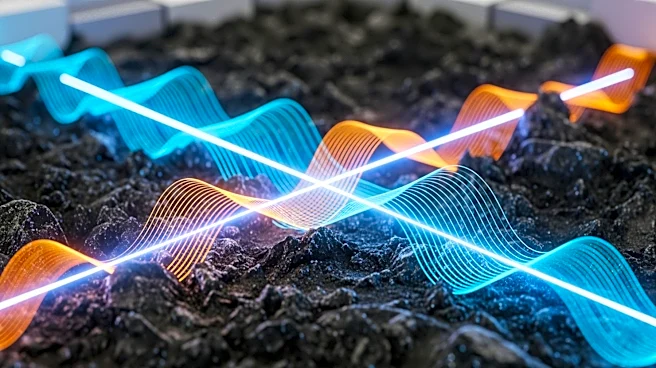
Researchers have developed a method combining Terahertz Time-Domain Spectroscopy (THz-TDS) with machine learning to achieve 96% accuracy in identifying coal-rock interfaces in mining. This advancement addresses a significant challenge in automated mining by
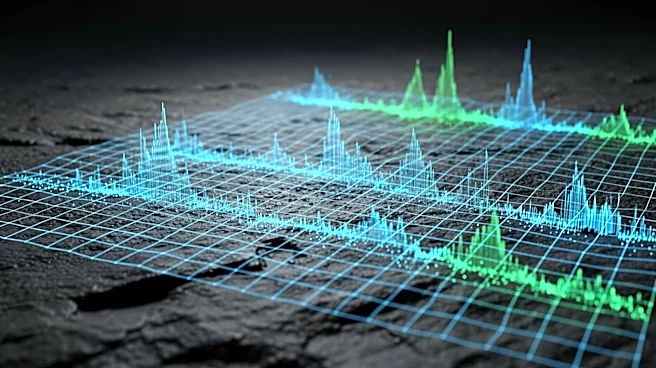
improving real-time decision-making, enhancing safety, and reducing equipment wear. The study, published in Photonics, demonstrates the potential of THz technology to distinguish between coal and rock in challenging underground conditions. The method uses a transmission-mode THz-TDS setup to measure spectral data, which is then processed using machine learning models to accurately identify geological boundaries.
Why It's Important?
This technological advancement is crucial for the mining industry as it enhances the efficiency and safety of mineral extraction processes. Accurate detection of coal-rock interfaces can prevent equipment damage and improve resource recovery, leading to cost savings and increased productivity. The integration of THz-TDS sensors into mining equipment could revolutionize 'smart' mining systems, allowing for adaptive cutting and real-time analysis of mineral content. This not only optimizes operations but also reduces environmental impact by minimizing unnecessary extraction.
Beyond the Headlines
The use of THz-TDS in mining represents a shift towards more sustainable and precise extraction methods. By reducing reliance on traditional detection methods that struggle in harsh underground environments, this technology offers a non-destructive and non-ionizing alternative. The potential for integrating THz data with other sensor technologies could lead to comprehensive monitoring systems that enhance operational safety and efficiency. This development aligns with the industry's move towards digitalization and automation, paving the way for future innovations in geophysical perception.