



What's Happening?
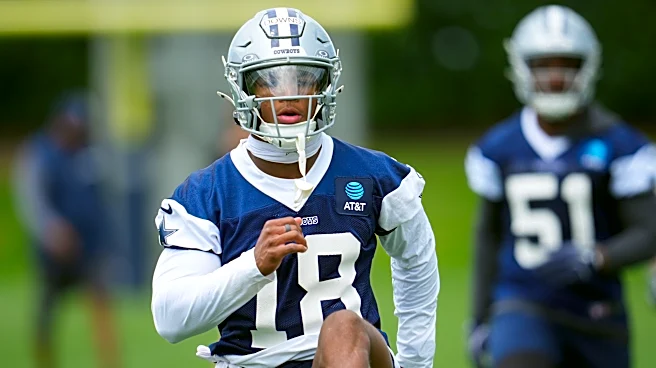
Catalina Mancera, the girlfriend of the late Dallas Cowboys defensive end Marshawn Kneeland, recently shared her experiences of coping with his death and celebrating their unborn child. Kneeland died by suicide in November following a police pursuit in Texas.
Mancera, who is expecting their child in June, expressed gratitude for the support from family and friends during this challenging time. She shared her feelings in an Instagram post, highlighting the love and support she has received, which has helped her navigate this difficult period. Mancera's baby shower was held in Pilot Point, Texas, and she also thanked her family for organizing a celebration in Michigan. Kneeland, who was 24 at the time of his death, had a history of mental health struggles, as revealed by 911 dispatch audio. His death occurred shortly after he played in a game against the Arizona Cardinals.
Why It's Important?
The story underscores the ongoing issue of mental health challenges faced by athletes, particularly in high-pressure environments like professional sports. Kneeland's tragic death highlights the need for increased mental health support and resources for athletes. The NFL and other sports organizations may need to reassess their mental health programs to better support players. Mancera's public sharing of her experience also brings attention to the personal impact of such tragedies on families and loved ones. This could lead to broader discussions about mental health awareness and the importance of providing support systems for those affected by similar situations.
What's Next?
As Mancera prepares for the birth of her child, she may continue to receive support from her community and family. The NFL and the Dallas Cowboys might consider honoring Kneeland's memory and raising awareness about mental health issues among players. This situation could prompt further discussions within the sports community about implementing more comprehensive mental health initiatives. Additionally, Mancera's story may inspire others to share their experiences, potentially leading to increased advocacy for mental health resources in sports.