





What's Happening?
The National Oceanic and Atmospheric Administration (NOAA) has advanced Deep Sea Minerals Corp.'s application for exploring critical minerals on the Pacific seabed. The company received a 'substantial compliance' determination under the Deep Seabed Hard
Mineral Resources Act, allowing it to proceed with federal review for exploration and potential recovery of polymetallic nodules. The concession area, located in the Clarion-Clipperton Zone, is believed to contain significant deposits of nickel, cobalt, copper, and manganese. This move aligns with efforts to secure domestic sources of critical minerals.
Why It's Important?
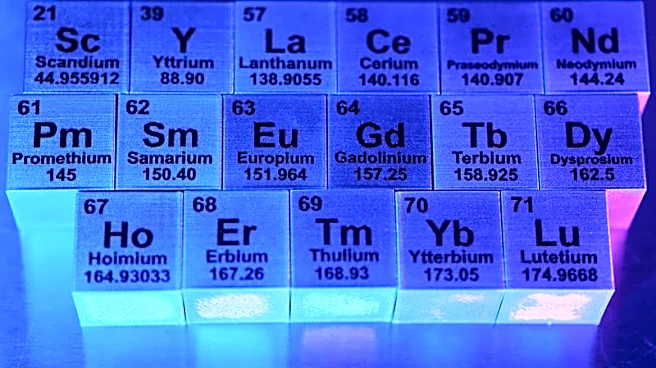
The advancement of Deep Sea Minerals' application by NOAA is a significant step in the U.S. strategy to secure critical mineral resources. These minerals are essential for various industries, including batteries, defense systems, and energy infrastructure. The exploration of seabed minerals offers an alternative to reliance on foreign sources, particularly China. However, environmental concerns about deep-sea mining's impact on ocean ecosystems remain, prompting calls for scientific study and responsible development practices.
Beyond the Headlines
The exploration of seabed minerals raises ethical and environmental questions about the impact on fragile ocean ecosystems. While the potential for resource extraction is promising, it must be balanced with conservation efforts to protect marine biodiversity. The regulatory framework governing seabed mining, including NOAA's role, is crucial in ensuring responsible practices. The U.S. approach, separate from the International Seabed Authority, reflects geopolitical considerations and the need for domestic resource security.