








What's Happening?
Dubai-based ship recycling company GMS has obtained approval from the U.S. government to scrap four container ships that were under Iran-related sanctions. This move is part of a broader effort to reduce the number of vessels that operate outside of compliance
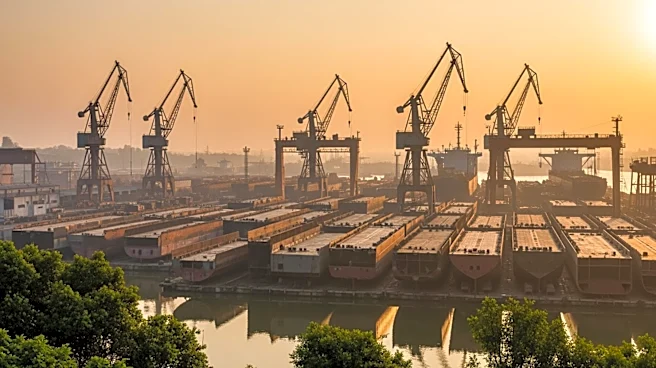
with international regulations, posing environmental risks such as oil spills and fuel leaks. GMS, which specializes in buying and recycling ships, has been in discussions with U.S. authorities for months to facilitate the scrapping of these sanctioned vessels. The approval allows GMS to proceed with the recycling process, which is expected to take place in regulated yards, primarily in Asia. The initiative is seen as a step towards reducing the shadow fleet of ships that help countries like Iran and Russia circumvent international sanctions.
Why It's Important?
The approval for GMS to scrap these ships is significant as it addresses both environmental and geopolitical concerns. By removing non-compliant vessels from circulation, the initiative helps mitigate the risk of environmental disasters in busy sea lanes. Additionally, it aligns with U.S. efforts to enforce sanctions against Iran and Russia, thereby reducing their ability to bypass international restrictions. The move also highlights the complexities of international trade and the challenges faced by companies like GMS in navigating sanctions while maintaining compliance with U.S. regulations. The decision could set a precedent for how other sanctioned vessels are handled in the future, potentially leading to more stringent enforcement of international maritime laws.
What's Next?
GMS plans to continue targeting other sanctioned vessels, including oil tankers, for scrapping. However, the feasibility of this business depends on geopolitical developments, particularly the resolution of the U.S.-Israeli conflict with Iran. The ongoing conflict has left many ships stranded in the Gulf region, complicating efforts to recycle them. GMS's future actions will likely depend on the stability of the tanker market and the resolution of geopolitical tensions. The U.S. government's approach to granting licenses for such operations will also play a crucial role in determining the pace and scope of future scrapping activities.