








What's Happening?
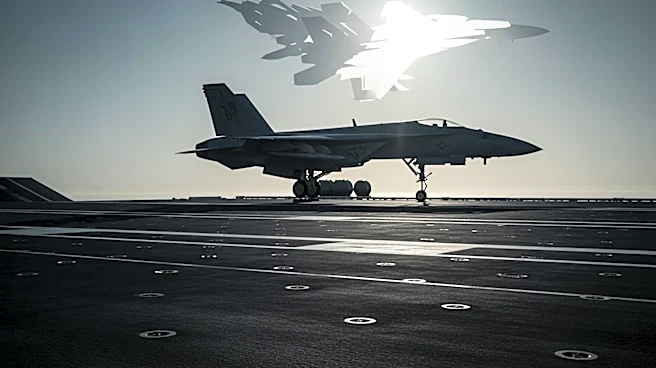
Boeing has announced its decision not to participate in the U.S. Navy's next-generation trainer competition. The company determined that its T-7A Red Hawk does not align with the Navy's Undergraduate Jet Training System requirements, despite its current
use by the U.S. Air Force. This decision allows Boeing to concentrate on its sixth-generation aircraft programs. The competition now includes teams from Sierra Nevada Co. with Northrop Grumman, General Atomics Aeronautical Systems Inc., and a team of Leonardo and Textron. Boeing remains committed to delivering the T-7A for evolving pilot training needs and continues to offer it globally.
Why It's Important?
Boeing's withdrawal from the competition highlights the strategic focus on developing advanced aircraft technologies, particularly sixth-generation fighters. This move could impact the competitive landscape of military aviation, as Boeing reallocates resources to prioritize top Pentagon projects. The decision also underscores the challenges faced by defense contractors in meeting evolving military requirements. The remaining competitors in the Navy's trainer program may benefit from reduced competition, potentially influencing the program's outcome and future military training capabilities.
What's Next?
The U.S. Navy is expected to make its selection for the next-generation trainer soon, with Boeing and Northrop Grumman as contenders for the sixth-generation fighter program. The outcome of these selections will shape the future of U.S. military aviation training and development. Boeing's focus on sixth-generation aircraft may lead to advancements in military technology and capabilities, influencing defense strategies and procurement decisions.