
What's Happening?
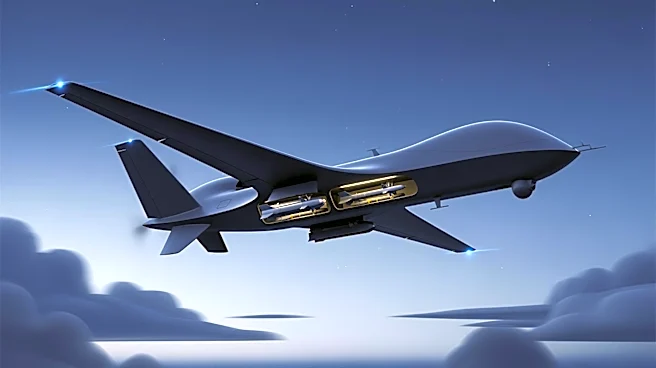
Boeing has revealed the latest iteration of its MQ-28 Ghost Bat collaborative combat aircraft (CCA) at the ILA Berlin airshow. The Block 3 version features a larger wing, increased fuel and payload capacity,
and internal weapons bays capable of carrying AIM-120 AMRAAMs and Small Diameter Bombs. This stealthy drone is designed for flexibility and extended range, with beyond-line-of-sight capabilities. Boeing's partnership with Rheinmetall aims to offer the Ghost Bat to the German military, tapping into the European CCA market. The MQ-28 is undergoing test flights in California, indicating potential U.S. military interest.
Why It's Important?
The MQ-28 Ghost Bat represents a significant advancement in unmanned aerial vehicle technology, offering enhanced stealth and combat capabilities. Its ability to carry weapons internally without compromising its low-observable characteristics is a notable development in military aviation. This advancement could influence future military procurement decisions, as countries seek to enhance their air combat capabilities with versatile and stealthy drones. The Ghost Bat's features align with the growing demand for unmanned systems that can operate in contested environments, providing strategic advantages in modern warfare.
What's Next?
Boeing's MQ-28 Ghost Bat is expected to enter service with the Royal Australian Air Force by 2028, with potential export opportunities to other allied countries. The ongoing test flights and demonstrations aim to validate the drone's capabilities and attract interest from military clients. As the collaborative combat aircraft market evolves, Boeing may continue to refine the Ghost Bat's design and expand its operational roles, potentially influencing the future landscape of military aviation.