



What's Happening?
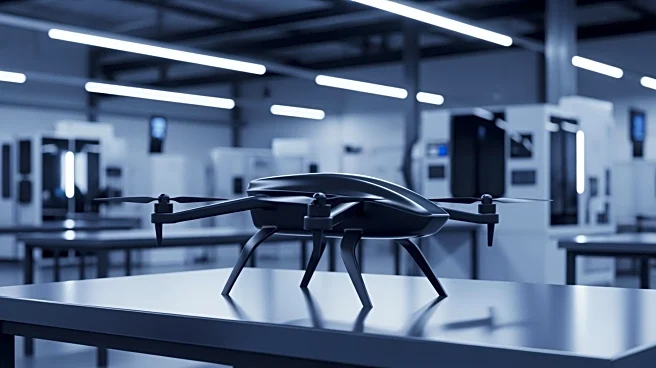
Anduril, a private defense contractor, is set to commence production of its YFQ-44A Fury drone at its newly established Arsenal-1 manufacturing facility in Columbus, Ohio. This development comes ahead of the originally scheduled start date in July 2026.
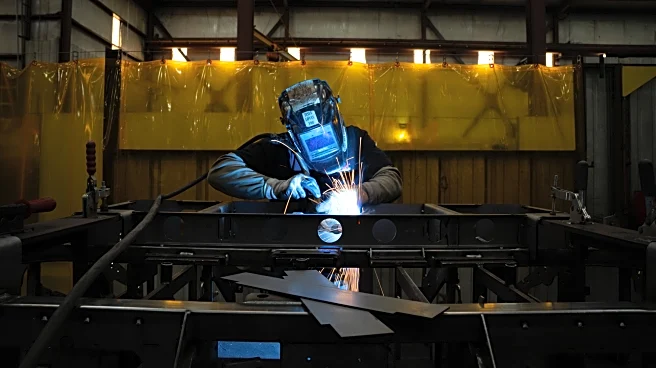
The facility, which spans 5 million square feet, is strategically located next to a local airport, providing access to extensive runways and a private apron suitable for military-scale aircraft. The YFQ-44A Fury is part of Anduril's offering for the Air Force's collaborative combat aircraft competition. The company is leveraging a broad commercial supply chain to keep costs low and ensure scalability in production. This move aligns with the Trump administration's push for increased domestic manufacturing in the defense sector.
Why It's Important?
The initiation of drone production at Anduril's Ohio facility marks a significant step in bolstering U.S. defense manufacturing capabilities. By investing in domestic production, Anduril is contributing to the national goal of reducing reliance on foreign manufacturing for critical defense components. This development is likely to enhance the U.S. Air Force's operational capabilities by providing advanced, cost-effective drone technology. The facility's strategic location and design will facilitate rapid delivery of components and systems, potentially giving the U.S. military a competitive edge. Additionally, the use of a broad supply chain could lead to economic benefits for multiple vendors and create job opportunities in the region.
What's Next?
As production begins, Anduril will focus on scaling up its manufacturing capabilities to meet potential demand for the YFQ-44A Fury and other products. The Air Force is expected to make a competitive Increment 1 production decision in fiscal year 2026, which could further influence Anduril's production plans. The company has already started armed flight testing and achieved milestones in semi-autonomous flight capabilities. These advancements may position Anduril favorably in the ongoing competition to supply the Air Force with collaborative combat aircraft. Stakeholders, including other defense contractors like General Atomics and Northrop Grumman, will likely monitor these developments closely.