




What's Happening?
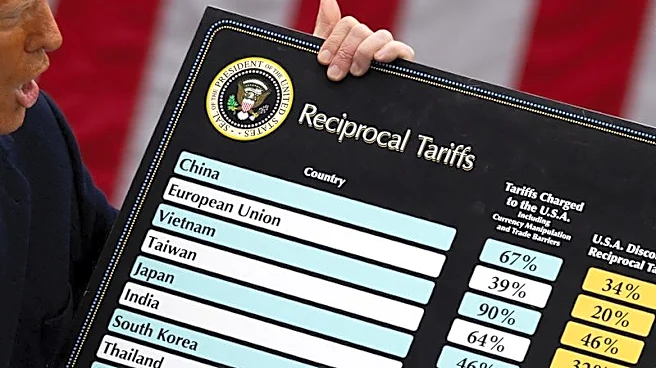
The U.S. Court of International Trade has ruled against President Trump's 10% global tariffs, declaring them illegal under a 1974 trade law. The court's decision marks a significant setback for the Trump administration's tariff policy, which has been
a cornerstone of its economic strategy. The ruling, delivered by a panel of judges in a 2-1 decision, found that the administration failed to justify the tariffs under Section 122 of the Trade Act of 1974. This section allows the president to impose tariffs up to 15% on all imports without congressional approval if certain conditions are met. However, the court noted that the administration did not identify any 'large and serious United States balance-of-payments deficits' as required by the law. As a result, the court ordered the administration to stop collecting these tariffs from the plaintiffs and to refund prior payments. This decision follows a Supreme Court ruling earlier this year that struck down other tariffs imposed by the administration.
Why It's Important?
This ruling is significant as it challenges the legal basis of President Trump's tariff policies, which have been a key element of his administration's approach to international trade. The decision could have wide-ranging implications for U.S. trade policy and the administration's ability to impose tariffs unilaterally. The ruling may also impact U.S. businesses and consumers, as tariffs generally lead to higher prices for imported goods. The decision to refund prior payments could provide financial relief to the affected importers, but it also raises questions about the administration's future tariff strategies. The ruling underscores the legal and economic challenges faced by the administration in implementing its trade policies, which have been characterized by frequent changes and legal disputes.
What's Next?
The Trump administration is expected to appeal the court's decision, which could prolong the legal battle over the tariffs. Meanwhile, the administration may explore other legal avenues to impose tariffs, potentially leading to further uncertainty for businesses and importers. The refund process for the tariffs deemed illegal by the court is expected to roll out in phases, but the timeline for these refunds remains unclear. The administration's response to the ruling and its future trade policy decisions will be closely watched by industry stakeholders and international trade partners.