








What's Happening?
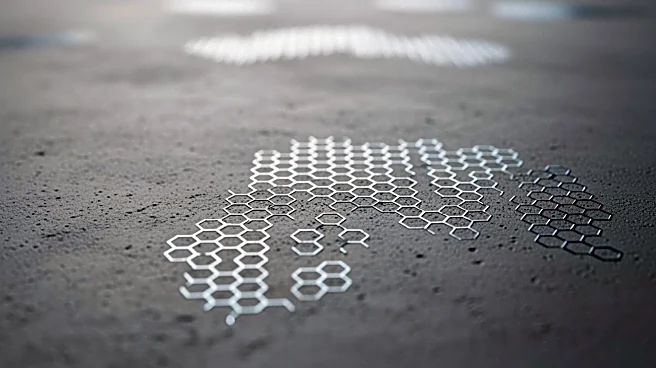
Researchers have explored the use of graphene as an additive to improve the mechanical strength, durability, and sustainability of concrete. Graphene, a two-dimensional material composed of a single atomic layer of carbon atoms, is known for its exceptional
tensile strength, surface area, and conductivity. The study, published in Scientific Reports, highlights graphene's potential to refine the microstructure of concrete, reduce porosity, and enhance strength. The research involved using Ordinary Portland Cement and various aggregates, with graphene dosages ranging from 0% to 0.5% by weight of cement. The findings indicate that an optimal dosage of 0.4% significantly improves both compressive and flexural strength, while also reducing permeability, thus enhancing durability.
Why It's Important?
The integration of graphene into concrete could revolutionize the construction industry by producing materials with superior mechanical properties and longevity. This advancement is particularly significant for infrastructure development, where enhanced durability can lead to longer service life and reduced maintenance costs. The ability of graphene to improve the interfacial transition zones within the cement matrix suggests potential for more resilient structures capable of withstanding environmental stresses. As the construction sector seeks sustainable solutions, graphene-enhanced concrete offers a promising path toward reducing the carbon footprint and resource consumption associated with traditional building materials.
What's Next?
Future research is expected to focus on optimizing graphene dispersion techniques and evaluating the long-term durability of graphene-enhanced concrete under various environmental conditions. Scaling these innovations for industrial adoption could lead to widespread use in construction projects, potentially transforming the industry. Stakeholders, including construction companies and material scientists, may collaborate to refine these technologies and explore new applications. The successful integration of graphene into concrete could set a precedent for incorporating other nanomaterials into building materials, further advancing the field of sustainable construction.