
What's Happening?
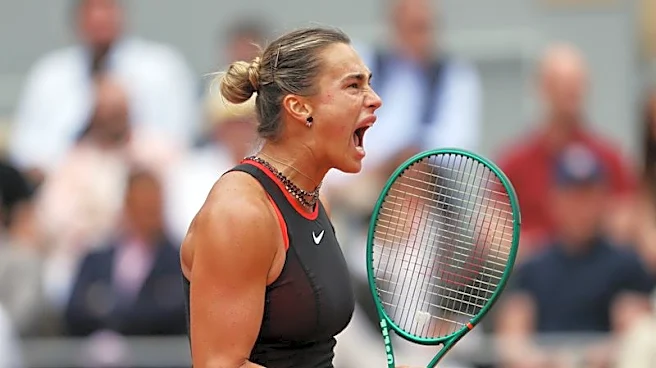
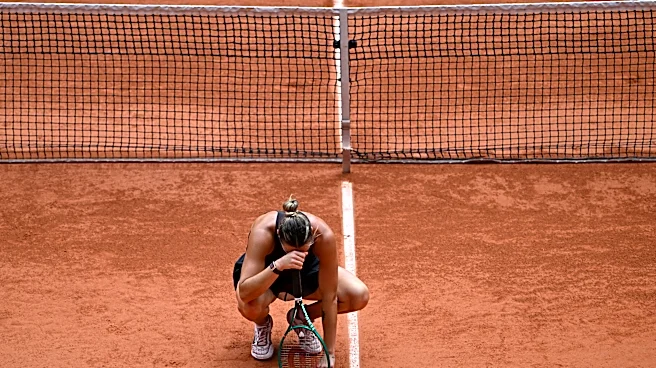
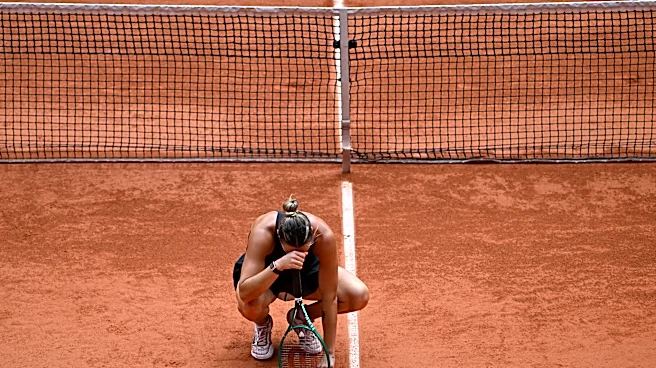
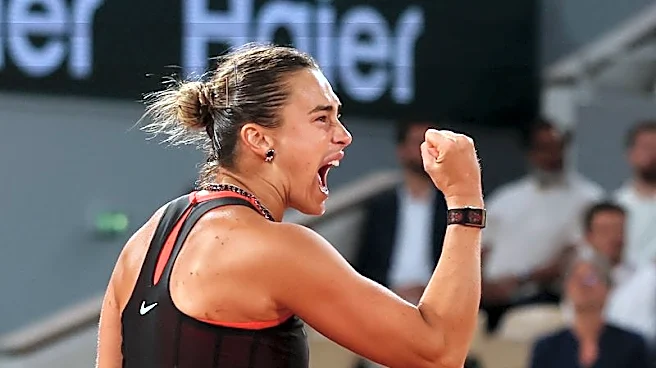
Aryna Sabalenka, the world No. 1, faced difficulties with windy conditions at the French Open, leading to her defeat against Russian No. 25 seed Diana Shnaider. Sabalenka was one game away from victory but lost nine consecutive games, resulting in a 3-6,
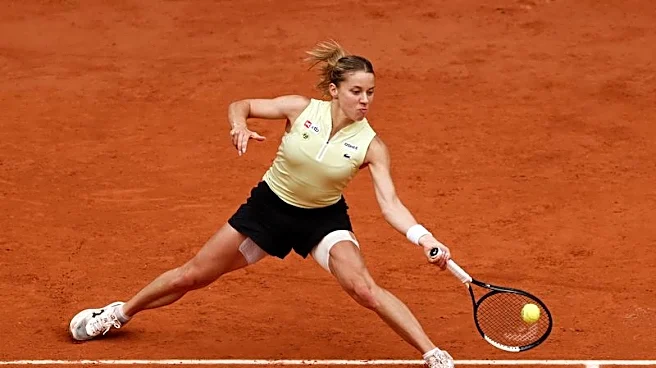
7-5, 6-0 defeat. This marks her earliest Grand Slam exit since a previous defeat due to illness. Shnaider capitalized on Sabalenka's struggles, dominating with her forehand and forcing errors. Sabalenka's inability to handle the wind has become a recurring issue, similar to past losses. Shnaider's victory propels her to the semifinals, where she will face Poland's Maja Chwalińska.
Why It's Important?
Sabalenka's defeat highlights the impact of environmental conditions on tennis performance, particularly for top players. Her loss opens opportunities for other competitors, such as Shnaider, to advance in the tournament. The match underscores the importance of mental resilience and adaptability in sports, as Sabalenka's emotional struggles contributed to her defeat. Shnaider's success demonstrates the potential for emerging players to challenge established stars, potentially shifting dynamics in women's tennis. The outcome may influence Sabalenka's approach to future matches, as she seeks to overcome challenges posed by external factors like wind.
What's Next?
Sabalenka will focus on preparing for Wimbledon, aiming to secure her first title on grass courts. Her grasscourt season begins at the Berlin Open, where she will work on mental and physical strategies to improve her performance. Shnaider's victory provides her with a significant opportunity to win her first Grand Slam title, as she advances to the semifinals. The match against Chwalińska will be crucial for both players, potentially altering their careers. Sabalenka's team may reassess strategies to address environmental challenges, ensuring better preparation for future tournaments.