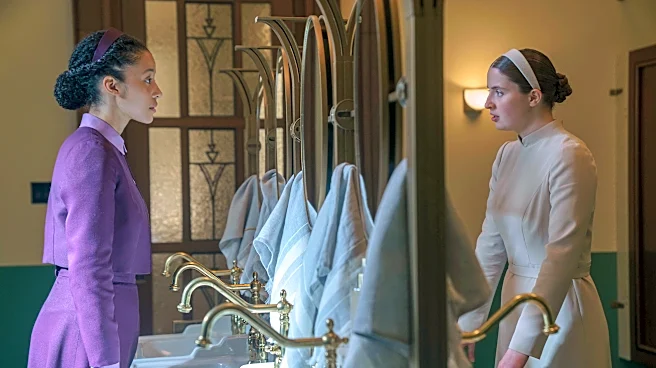







What's Happening?
Hulu's 'The Testaments,' a sequel to 'The Handmaid's Tale,' has premiered, continuing the narrative of Margaret Atwood's dystopian world. The series, which adapts Atwood's follow-up novel, explores the lives of characters in Gilead, focusing on June Osborne's
daughters and Aunt Lydia. The show introduces new characters and storylines, diverging from its predecessor by setting the narrative several years after the events of 'The Handmaid's Tale.' The creative team, including Elisabeth Moss as an executive producer, aims to establish 'The Testaments' as a standalone series while maintaining connections to the original. The series addresses themes of resistance and survival in a totalitarian regime, with a focus on the younger generation's awakening to the realities of Gilead.
Why It's Important?
'The Testaments' represents a strategic expansion of 'The Handmaid's Tale' universe, aiming to capture the interest of both existing fans and new viewers. The series' success is crucial for Hulu as it seeks to maintain its position in the competitive streaming market. By exploring new storylines and characters, the show has the potential to deepen the narrative and offer fresh perspectives on the themes of oppression and resistance. The series also reflects broader cultural conversations about women's rights and autonomy, potentially influencing public discourse and media portrayals of similar issues.
What's Next?
As 'The Testaments' progresses, the show's creators will likely focus on developing its unique identity while honoring the legacy of 'The Handmaid's Tale.' The series' reception will be closely monitored, with potential for additional seasons if it resonates with audiences. The show's impact on the broader cultural landscape and its ability to engage viewers with its timely themes will be key factors in its future success.