





What's Happening?
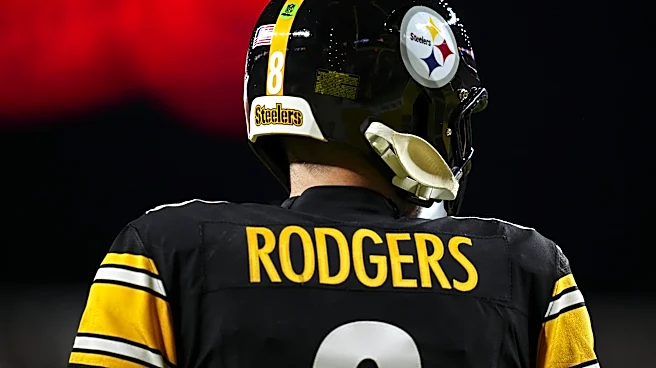
The Pittsburgh Steelers are in a holding pattern as they await Aaron Rodgers' decision on whether he will return as their starting quarterback for the 2026 season. Despite expectations of a meeting, Rodgers did not visit the Steelers' facility over the weekend,
adding to the uncertainty. ESPN's Dan Graziano suggests that the Steelers are content with waiting due to their satisfaction with Rodgers' performance last season. The team believes that retaining Rodgers is their best course of action, given their familiarity with his playing style and quirks. However, the delay in Rodgers' decision has left fans and analysts questioning the wisdom of relying on a 42-year-old quarterback.
Why It's Important?
The Steelers' decision to wait for Aaron Rodgers underscores the challenges teams face in balancing short-term success with long-term planning. Rodgers' potential return could provide stability and experience, crucial for a team aiming to remain competitive in the AFC North. However, the reliance on an aging quarterback raises concerns about the team's future and the development of younger players. The situation highlights the broader issue of how NFL teams manage veteran players and the impact of such decisions on team dynamics and performance. The outcome of Rodgers' decision could influence the Steelers' strategy and set a precedent for other teams facing similar dilemmas.
What's Next?
As the Steelers continue to wait for Rodgers' decision, they must prepare for various scenarios. If Rodgers returns, the team will likely focus on leveraging his experience to achieve short-term success. If he does not, the Steelers may need to accelerate the development of their younger quarterbacks or explore other options in the market. The decision will also impact the team's draft strategy and roster management. Meanwhile, the NFL community will watch closely, as Rodgers' choice could trigger a ripple effect across the league, influencing player movements and team strategies.