

What's Happening?
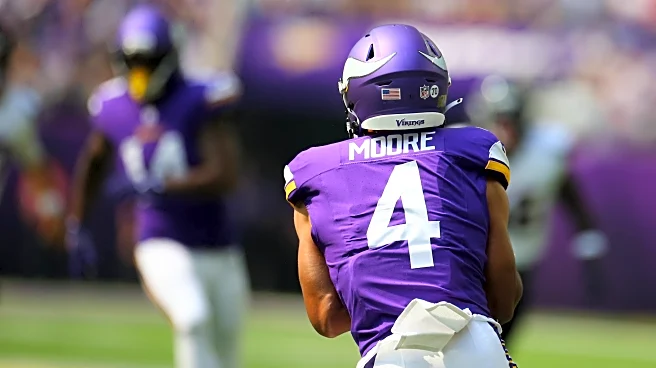
Minnesota Vikings wide receiver Rondale Moore has passed away at the age of 25. Moore was found deceased in a garage in New Albany, Indiana, according to New Albany Police Chief Todd Bailey. The initial belief is that Moore died by suicide, though the investigation
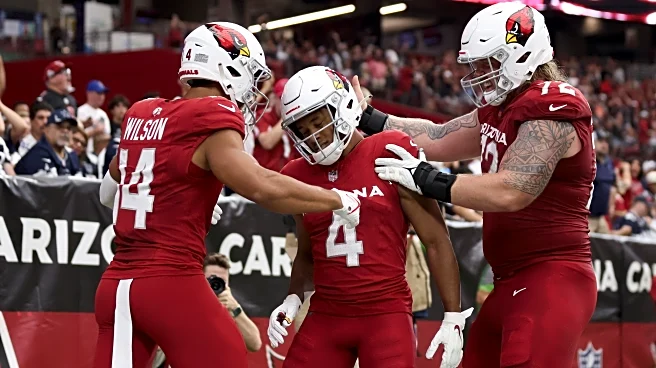
is ongoing. Moore's NFL career began when he was drafted by the Arizona Cardinals in the second round of the 2021 NFL Draft. He later played for the Atlanta Falcons and signed with the Minnesota Vikings in 2025. Moore's career was marred by injuries, including a torn ACL that sidelined him for the 2024 season. Before his professional career, Moore was a standout player at Purdue University, earning All-American honors as a freshman.
Why It's Important?
The passing of Rondale Moore is a significant loss to the NFL community and highlights the ongoing mental health challenges faced by athletes. Moore's death underscores the importance of mental health support and resources for players who often deal with immense pressure and public scrutiny. The incident may prompt the NFL and other sports organizations to re-evaluate their mental health programs and support systems. Moore's passing also serves as a reminder of the personal struggles that can accompany professional sports careers, despite the public perception of success and fame.
What's Next?
As the investigation into Moore's death continues, there may be increased calls for the NFL to enhance its mental health initiatives. The league could face pressure to implement more comprehensive support systems for players, both current and former. Additionally, Moore's passing may lead to broader discussions within the sports community about the mental health challenges athletes face and the need for more open conversations and resources.
Beyond the Headlines
Moore's death may have a lasting impact on how mental health is addressed in professional sports. It could lead to cultural shifts within the NFL and other leagues, encouraging more players to speak openly about their mental health struggles. This tragedy might also inspire legislative or policy changes aimed at improving mental health care for athletes, potentially influencing how sports organizations prioritize player well-being.