


What's Happening?
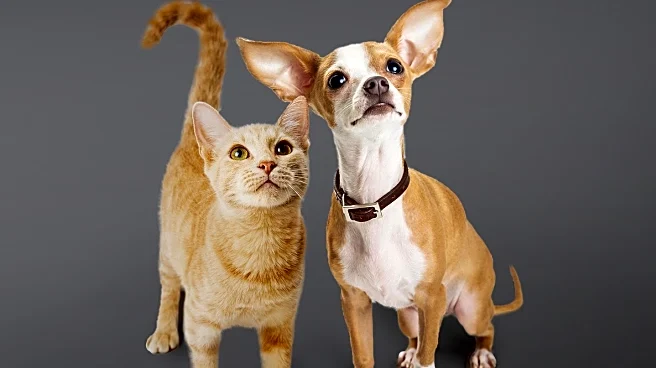
A recent study conducted by evolutionary biologists Abby Drake from Cornell University and Jonathan Losos from Washington University has revealed that certain breeds of dogs and cats are evolving to look more similar due to human breeding preferences. The study analyzed the skull shapes of approximately 2,800 domesticated and wild cats and dogs, finding that domesticated breeds exhibit more variation due to artificial selection. This phenomenon, known as convergent evolution, is driven by human preferences for features such as flat faces and large eyes, which resemble human infants and trigger parental instincts. Breeds like pugs and Persian cats are noted for their uncanny resemblance, a result of selective breeding practices.
Why It's Important?
The findings highlight
the significant impact of human aesthetic preferences on the evolution of domesticated animals. By breeding for specific traits, humans are influencing the physical characteristics of pets, which can have health implications. For instance, flat-faced breeds like pugs and Boston Terriers face health challenges, such as breathing difficulties, due to their altered facial structures. This study underscores the ethical considerations in breeding practices, as prioritizing appearance over health can lead to compromised animal welfare. The research also provides insight into how human actions can drive evolutionary changes in other species.
What's Next?
The study may prompt discussions among breeders, veterinarians, and animal welfare advocates about the ethical implications of selective breeding. There could be increased advocacy for breeding practices that prioritize the health and well-being of animals over aesthetic traits. Additionally, the findings might influence future breeding standards and regulations to ensure that animal welfare is not compromised for the sake of appearance. Public awareness campaigns could also emerge, educating pet owners about the potential health issues associated with certain breeds.
Beyond the Headlines
The study raises broader questions about the role of humans in shaping the evolution of other species. It highlights the interconnectedness of human and animal lives and the responsibilities that come with it. The research also touches on cultural aspects, as the preference for certain animal features is influenced by societal norms and trends. This could lead to a reevaluation of what is considered 'cute' or desirable in pets, potentially shifting public perceptions and breeding practices over time.