







What's Happening?
Delfab, a manufacturing business based in Gladstone, has declared bankruptcy after 23 years of operation. The company, which was established by former employees of Partek Forest, specialized in manufacturing forestry equipment. Delfab's financial struggles
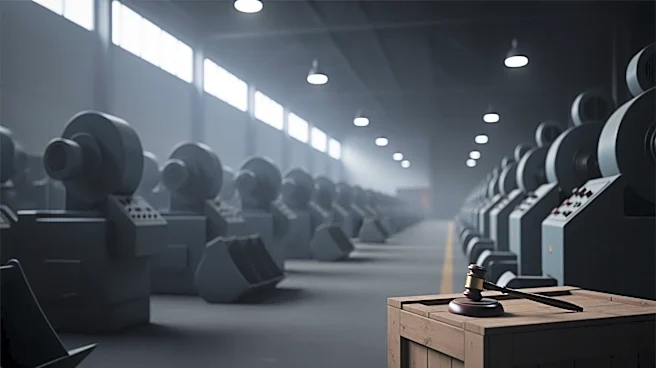
began after the 2008 recession, leading to a period of negative cash flow. Despite efforts to revitalize the business, including securing loans and modernizing machinery, the company could not sustain operations. Delfab's assets, including industrial equipment, will be auctioned online. The auction is open to the public and will feature over 500 lots of equipment. The company's bankruptcy follows a failed acquisition attempt by Aggressive Manufacturing Innovations, Inc. (AMI), which had planned to purchase Delfab's facility and lease part of it back to the company.
Why It's Important?
The bankruptcy of Delfab highlights the challenges faced by small manufacturing businesses in maintaining financial stability, especially in the wake of economic downturns. The closure of Delfab not only affects its employees but also the local economy in Gladstone, which relied on the company as a source of employment and economic activity. The failed acquisition by AMI underscores the difficulties in securing investment and support for revitalizing aging industrial facilities. This development may deter future investments in similar businesses, impacting the broader manufacturing sector in the region. Additionally, the auction of Delfab's assets presents an opportunity for other local businesses to acquire industrial equipment at potentially lower costs, which could aid in their growth and expansion.
What's Next?
With Delfab's assets set to be auctioned, local businesses and manufacturers have the opportunity to acquire equipment that could enhance their operations. The outcome of the auction may influence the future of manufacturing in the region, depending on how the equipment is utilized by new owners. Meanwhile, AMI continues to seek a location for its proposed powder-coating facility, indicating ongoing interest in expanding operations in the Upper Peninsula. The situation also raises questions about the support available for small businesses facing financial difficulties, and whether more robust measures could prevent similar closures in the future.