


What's Happening?
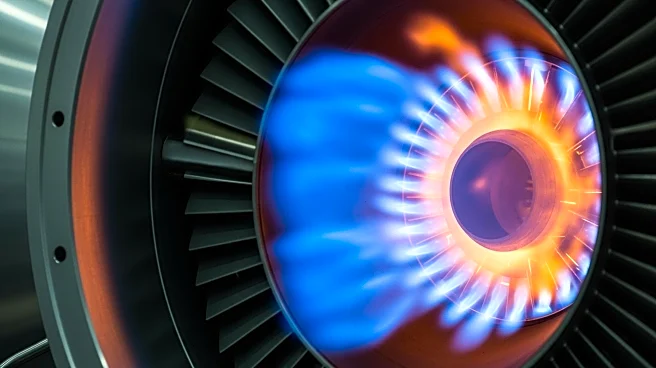
GE Vernova and IHI Corp. have successfully demonstrated that full-scale combustor components for GE Vernova’s F-class gas turbines can operate on 100% ammonia at full-load conditions. This test, conducted at IHI’s Large-Scale Combustion Test facility
in Japan, marks a significant step in their joint effort to decarbonize dispatchable power. The companies aim to commercialize an ammonia-capable F-class turbine by 2030. The test aligns with their development roadmap, although specific emission levels and other test parameters were not disclosed. This development is part of a broader initiative to explore ammonia as a lower-cost alternative fuel for gas turbines, particularly in Japan and Asia.
Why It's Important?
The successful test of ammonia combustion in gas turbines is a pivotal development in the pursuit of lower-carbon energy solutions. Ammonia, which contains no carbon and produces no carbon dioxide during combustion, offers logistical advantages over hydrogen, making it an attractive option for countries like Japan and South Korea that are seeking to decarbonize their energy sectors. The ability to retrofit existing gas turbines to use ammonia could significantly reduce carbon emissions without the need for new infrastructure, offering a cost-effective path to meet decarbonization targets. This advancement could influence global energy markets and policies, particularly in regions with limited renewable resources.
What's Next?
GE Vernova and IHI plan to continue their collaboration to develop a retrofittable 100% ammonia-capable combustion system for existing gas turbines. The companies are working towards commercial deployment by 2030, which could open new markets and opportunities for decarbonization. The success of this initiative may prompt other manufacturers to explore similar technologies, potentially leading to broader adoption of ammonia as a fuel. Regulatory and market responses will be crucial, as governments and industries assess the feasibility and benefits of integrating ammonia into their energy strategies.