
What's Happening?
The demolition of containerships has hit a 20-year low, with only 12 ships scrapped in 2025, according to a report by Alphaliner. This trend is attributed to the high demand for shipping capacity and robust
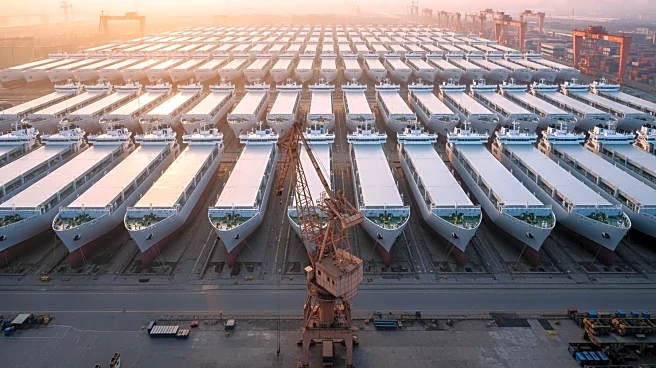
charter rates, which have led shipowners to retain older vessels. The report highlights that the ships being scrapped are among the oldest and smallest in the sector. Despite expectations for increased recycling due to environmental regulations, the industry has seen a surge in newbuilding orders, contributing to concerns about oversupply. The orderbook for new vessels continues to grow, with significant investments in new ships by major carriers.
Why It's Important?
The low rate of containership demolition and the increase in new orders could lead to an oversupply of shipping capacity, potentially affecting market dynamics. This situation poses challenges for the industry as it seeks to balance capacity with environmental regulations and efficiency needs. The continued investment in new vessels indicates confidence in the long-term growth of global trade, but it also raises questions about the sustainability of current practices. The industry's response to these challenges will be crucial in determining its future direction and impact on global supply chains.
What's Next?
As the industry navigates these challenges, stakeholders may need to consider strategies to manage capacity and comply with environmental regulations. The anticipated reopening of the Suez Canal-Red Sea corridor could release additional capacity, further influencing market conditions. Industry leaders may also explore innovative solutions to enhance efficiency and reduce environmental impact. The outcome of these efforts will shape the future of the shipping industry and its role in global trade.