





What's Happening?
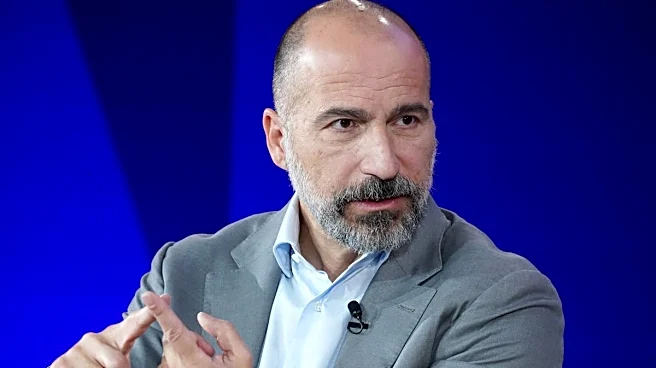
Concerns are mounting among tech executives and analysts about the return on investment (ROI) from artificial intelligence (AI) spending. Uber COO Andrew Macdonald highlighted the difficulty in linking AI spending to productivity gains, noting that the rideshare
company has not seen improvements commensurate with its AI investments. OpenAI CEO Sam Altman echoed these concerns, stating that while AI is promising, companies are still figuring out how to implement it effectively. Investor Michael Burry criticized the 'tokenmaxxing' trend, describing it as unsustainable and driven by overconsumption. The debate reflects a broader industry concern about the financial viability of current AI spending practices.
Why It's Important?
The scrutiny over AI spending is significant as it highlights a potential financial bubble within the tech industry. Companies are investing heavily in AI without clear evidence of proportional returns, which could lead to financial instability if the expected benefits do not materialize. This situation poses risks to tech companies' financial health and could impact investor confidence. The discussion also underscores the need for more strategic and efficient AI implementation to ensure sustainable growth and innovation. As AI continues to evolve, companies must balance innovation with financial prudence to avoid potential economic repercussions.
What's Next?
As the industry grapples with these challenges, companies may need to reassess their AI strategies to focus on sustainable and measurable outcomes. This could involve developing better tools for tracking AI's impact on productivity and revenue. Additionally, there may be increased pressure on AI developers to create more efficient and cost-effective solutions. The ongoing debate is likely to influence future investment decisions and could lead to a shift towards more cautious and calculated AI spending. Stakeholders, including investors and tech leaders, will be closely monitoring developments to ensure that AI investments yield tangible benefits.