



What's Happening?
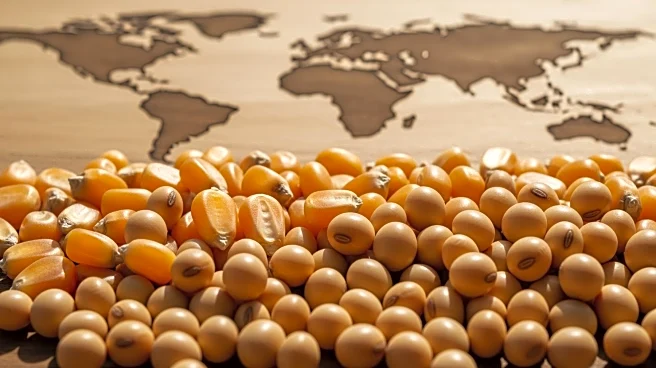
The U.S. agricultural export landscape has undergone significant changes in 2025, with diversification playing a crucial role in the corn and soybean markets. According to USDA data, corn exports have expanded due to a more diversified market, while soybean exports have contracted. The diversification of export destinations has helped cushion the decline in soybean exports, which have been affected by reduced demand from China. In contrast, corn exports have benefited from increased demand in new markets, despite reductions in traditional markets like Mexico and Japan. This shift highlights the strategic importance of diversified market portfolios in mitigating risks associated with reliance on single markets.
Why It's Important?
The diversification of U.S. agricultural
exports is significant for several reasons. For soybean producers, the shift away from a heavy reliance on China has helped prevent a potential market collapse, demonstrating the importance of having multiple export destinations. For corn producers, diversification has not only cushioned declines but also driven growth, showcasing the benefits of competitive pricing and reliable supply. This strategic approach reduces vulnerability to market disruptions and policy changes in any single destination, ensuring more stable and sustainable growth for U.S. agriculture. The changes in export patterns also reflect broader geopolitical and economic shifts, influencing trade relationships and market dynamics.
What's Next?
As the U.S. continues to diversify its agricultural export markets, further growth opportunities may arise in regions like Southeast Asia, North Africa, and Latin America. Building market presence in these new destinations will require investment in relationships, adaptation to local preferences, and infrastructure development. The ongoing trade tensions with China may continue to influence export patterns, prompting U.S. producers to seek alternative markets. Additionally, the success of diversification strategies in the corn and soybean markets could serve as a model for other agricultural sectors looking to enhance their resilience and competitiveness in the global market.