

What's Happening?
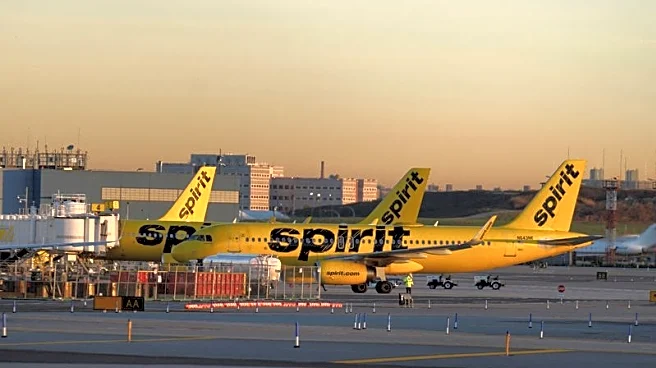
Spirit Airlines is advocating for the Federal Aviation Administration (FAA) to focus flight reductions at Chicago O'Hare International Airport on American Airlines and United Airlines. Spirit argues that these airlines' aggressive expansion plans have
led to the current scheduling crisis. The FAA has proposed a daily flight cap of 2,800 at the airport for the summer, down from the planned 3,080 daily operations. Spirit contends that any flight cuts should be taken from the increases proposed by American and United, who have significantly ramped up their operations at the hub. The FAA's final decision is pending, with discussions ongoing about potentially stricter limits.
Why It's Important?
The outcome of the FAA's decision on flight reductions at Chicago O'Hare could significantly impact the competitive landscape among airlines operating at the airport. Spirit Airlines, a smaller carrier, argues that proportional cuts would unfairly disadvantage it, potentially leading to higher fares due to reduced competition. The decision will also affect the airport's capacity to handle peak travel demands, influencing passenger convenience and airline profitability. The FAA's approach to managing airport congestion could set a precedent for other major hubs facing similar challenges.
What's Next?
The FAA is expected to announce its final decision on the flight cap soon. The decision will likely prompt reactions from major stakeholders, including American and United, who may need to adjust their operational strategies. Spirit Airlines and other smaller carriers will be closely monitoring the outcome to assess its impact on their market position. The broader airline industry will be watching for any regulatory changes that could affect scheduling and capacity management at other congested airports.