








What's Happening?
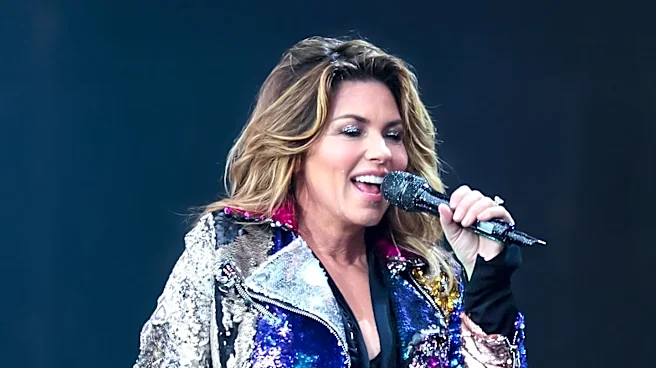
Shania Twain, the renowned singer, has opened up about how menopause has influenced her perception of her body and self-confidence. During her 2019 Las Vegas residency, Twain faced challenges with body image, exacerbated by a thigh injury and efforts
to maintain a thinner physique. She described feeling out of control due to the physical changes brought on by menopause, such as bloating and difficulty losing weight. Twain admitted to engaging in unhealthy practices, including intense workouts and restrictive dieting, which led to malnourishment and worsened her injury. Over time, she has embraced the changes, learning to accept her body and its natural transformations. Twain's experience highlights the broader conversation around menopause and body image, with other celebrities like Katherine Heigl and Gabrielle Union sharing similar journeys.
Why It's Important?
The discussion around menopause and body image is significant as it addresses a common yet often stigmatized phase in women's lives. Twain's candidness brings attention to the psychological and physical challenges many women face during menopause, promoting a dialogue on self-acceptance and health. This conversation is crucial for societal understanding and support, encouraging women to embrace their bodies and seek healthier lifestyles. The experiences shared by Twain and other celebrities can inspire women to prioritize mental and physical well-being over societal pressures to maintain certain body standards. This shift in perspective can lead to broader acceptance and support for women undergoing menopause, impacting public health policies and societal attitudes towards aging.
What's Next?
As more public figures discuss menopause, there may be increased advocacy for research and resources to support women during this transition. Health professionals and policymakers could focus on developing comprehensive care strategies that address both physical and psychological aspects of menopause. Additionally, media and cultural narratives might evolve to portray menopause as a natural and empowering phase, rather than a decline. This could lead to more inclusive and supportive environments for women, encouraging them to share their experiences and seek help without stigma.
Beyond the Headlines
The conversation around menopause also touches on broader themes of aging and societal expectations of women. Twain's story challenges the notion that aging should be feared or hidden, advocating for a more positive and realistic portrayal of life transitions. This could influence cultural attitudes towards aging, promoting acceptance and celebration of life's natural stages. Furthermore, it highlights the importance of mental health and self-care, encouraging women to prioritize their well-being over external validation.