


What's Happening?
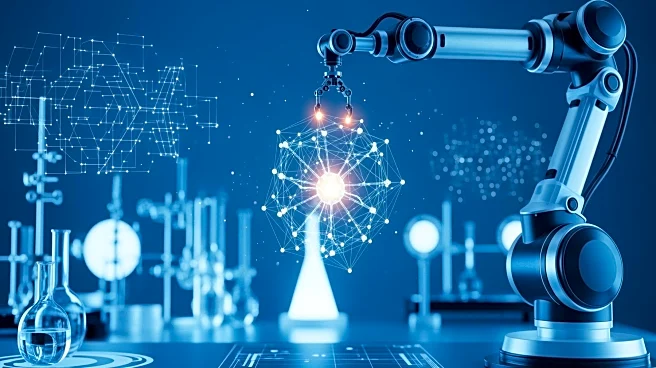
Telescope Innovations Corp. is advancing the commercial adoption of Self-Driving Labs (SDLs) and Physical AI, following the successful deployment of a pharmaceutical SDL in Korea. SDLs integrate robotics, analytics, and machine learning to autonomously conduct experiments, eliminating manual errors and enhancing safety in hazardous environments. The company's strategic focus aligns with industry trends, as Physical AI is recognized as a key technology for 2026. Telescope's SDLs are designed for scalability across various sectors, including pharmaceuticals, industrial chemistry, and agriculture, offering significant potential for innovation and efficiency.
Why It's Important?
The development of Self-Driving Labs represents a significant advancement in automation
and AI, with the potential to transform research and development processes across multiple industries. By automating complex experiments, SDLs can accelerate innovation, reduce costs, and improve safety in environments where human intervention is limited. This technology supports the growing trend towards domain-specific AI, providing high-quality data for specialized applications. As industries increasingly adopt automation, SDLs offer a competitive edge by enhancing research capabilities and driving growth in the 'Automation Age.'
What's Next?
Telescope Innovations plans to continue expanding its SDL technology across various high-stakes industries, leveraging its success in the pharmaceutical sector. The company aims to capitalize on the growing demand for automation and AI-driven solutions, positioning itself as a leader in the field. As the global market for lab automation grows, Telescope's SDLs are expected to play a crucial role in advancing research and development efforts. The company will likely focus on further refining its technology and exploring new applications to maintain its competitive advantage.