

What's Happening?
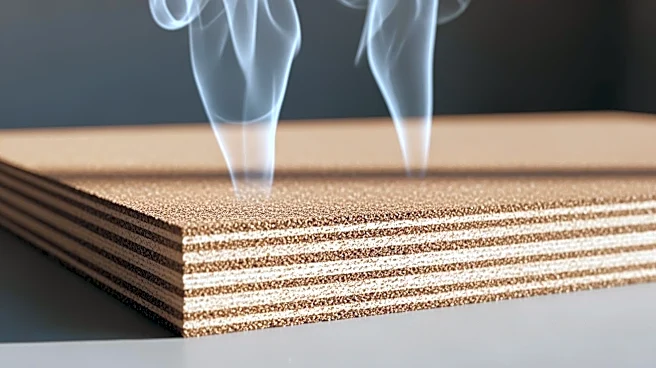
Researchers at ETH Zurich have developed a new type of fire-resistant building panel made from sawdust and struvite, a mineral commonly found in wastewater systems. This innovation offers a sustainable alternative for construction materials, utilizing
waste products to create durable interior wall panels. Struvite's natural fire-resistant properties are enhanced by its ability to release water vapor and ammonia when heated, which absorbs heat and prevents fire spread. The panels are strengthened with an enzyme from watermelon seeds, making them suitable for construction use.
Why It's Important?
This development is crucial for the construction industry as it aligns with the growing demand for sustainable building materials. The use of sawdust and struvite not only provides a fire-resistant solution but also supports circular economy principles by repurposing waste materials. This innovation could reduce reliance on traditional, less sustainable materials like cement, and help manage wastewater system blockages by utilizing struvite deposits. If commercialized, these panels could significantly impact environmental sustainability and safety standards in construction.
What's Next?
The commercialization of these sawdust-struvite panels faces challenges, primarily due to the higher cost of struvite compared to traditional materials. For widespread adoption, cost-effective methods for extracting and processing struvite from wastewater systems are needed. The construction industry may see increased interest in sustainable materials, prompting further research and development. Successful commercialization could lead to broader adoption of eco-friendly building practices, influencing industry standards and regulatory policies.