
What's Happening?
MicroVision has entered into a master development agreement with an undisclosed construction and mining equipment manufacturer to develop and commercialize LiDAR and perception technologies for autonomous
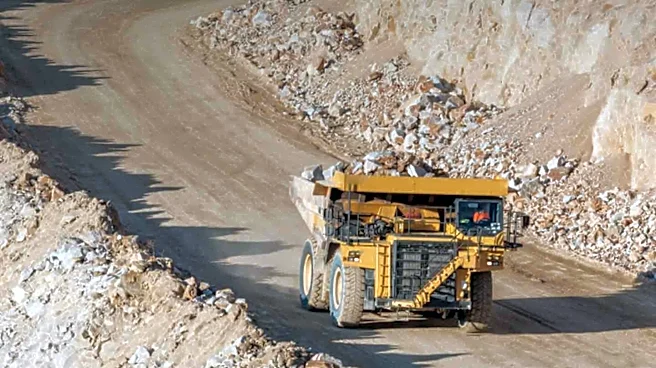
operations in heavy industry. This partnership marks MicroVision's strategic expansion beyond the automotive LiDAR market into industrial applications. The agreement involves the joint evaluation and deployment of sensing systems for the manufacturer's autonomous platforms, with an initial focus on quarry and aggregate hauling operations. The technology will utilize two Iris LiDAR sensors per off-highway truck, with testing and validation already underway. MicroVision's CEO, Glen DeVos, highlighted the significance of this milestone in enhancing safety, productivity, and the adoption of autonomous solutions globally.
Why It's Important?
This development is significant as it represents a strategic shift for MicroVision, expanding its market reach into the industrial sector. By partnering with a global leader in autonomous mining and industrial equipment, MicroVision aims to leverage its LiDAR technology to improve operational safety and efficiency in heavy industries. This move could accelerate the adoption of autonomous solutions in mining, potentially transforming how these operations are conducted. The partnership also underscores the growing demand for advanced perception technologies in industrial applications, which could lead to increased productivity and reduced operational risks.
What's Next?
The next steps involve continued testing and validation of the LiDAR systems to ensure they meet the operational requirements of the mining equipment manufacturer. As the partnership progresses, there may be further developments in the integration of MicroVision's next-generation Halo sensor, which offers backward compatibility with existing Iris customers. This could lead to broader adoption of the technology across different industrial applications. Stakeholders in the mining and construction industries will likely monitor the outcomes of this partnership closely, as successful implementation could set a precedent for future autonomous operations in these sectors.