


What's Happening?
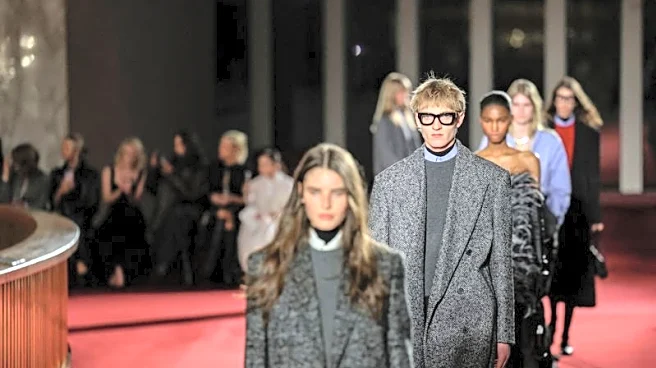
Carolina Herrera's Fall 2026 fashion show, led by creative director Wes Gordon, paid tribute to influential women artists. The collection, showcased in New York, featured a blend of sculpted and puffed silhouettes, floral and animal prints, and a vibrant color palette. The show was a homage to women who have shaped the creative landscape, including artists, muses, and curators. The venue, located in the Meatpacking District, was adorned with murals by Sarah Oliphant, complementing the collection's tones. The runway featured a diverse cast of creatives, including photographer Ming Smith and painter Amy Sherald, who embodied the collection's artistic spirit.
Why It's Important?
This event highlights the intersection of fashion and art, emphasizing the role of women
in shaping cultural narratives. By featuring artists on the runway, Carolina Herrera not only celebrates their contributions but also reinforces the brand's commitment to supporting female creatives. This approach aligns with broader industry trends towards inclusivity and diversity, potentially influencing other fashion houses to adopt similar practices. The collaboration between fashion and art can drive innovation and inspire new creative expressions, benefiting both industries.
What's Next?
The success of this show may encourage Carolina Herrera and other fashion brands to continue integrating artistic elements into their collections. Future collaborations with artists could lead to more innovative designs and presentations. Additionally, the positive reception of this event might inspire other fashion houses to explore similar themes, further blurring the lines between fashion and art. The ongoing support for female artists could also lead to increased visibility and opportunities within the fashion industry.
Beyond the Headlines
The collaboration between Carolina Herrera and women artists reflects a broader cultural shift towards recognizing and valuing diverse voices in creative fields. This trend could lead to more inclusive and representative narratives in fashion, art, and beyond. The emphasis on honoring women who have shaped culture underscores the importance of acknowledging historical contributions while fostering future innovation. This approach not only enriches the fashion industry but also contributes to a more equitable and dynamic cultural landscape.