
What's Happening?
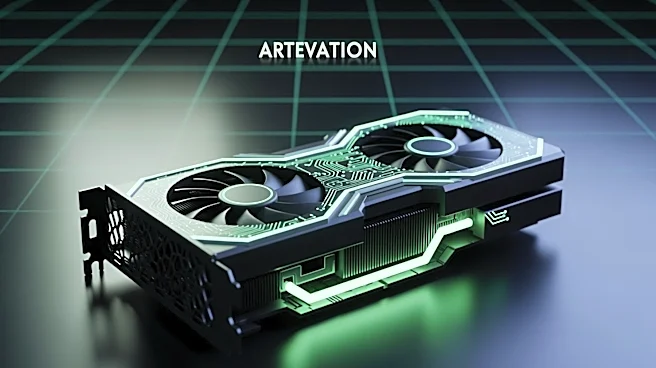
Nvidia's upcoming RTX 60-series graphics cards are anticipated to feature significant advancements in transistor density, according to a detailed analysis of past GPU generations. The analysis suggests
that Nvidia will continue to use TSMC's N3 process node, which could lead to a 66% increase in die density compared to previous models. This increase in density is expected to enhance the performance of CUDA cores, although the cache and analog systems may see limited improvements. The RTX 60-series is predicted to maintain similar die sizes to current models, optimizing wafer yields and profit margins. The analysis also highlights potential advancements in ray tracing and AI capabilities, with increased numbers of Tensor cores and improved RT cores.
Why It's Important?
The predicted enhancements in Nvidia's RTX 60-series GPUs could have significant implications for the gaming industry and AI applications. Increased transistor density and improved CUDA cores may lead to better performance in gaming and computational tasks, benefiting gamers and professionals alike. The advancements in ray tracing and AI capabilities could further enhance the realism and efficiency of graphics rendering and AI-driven processes. These developments may also influence competitive dynamics in the GPU market, as Nvidia seeks to maintain its leadership position amidst supply constraints and high memory prices. The potential for improved performance at similar die sizes suggests Nvidia's strategic focus on balancing innovation with cost-effectiveness.
What's Next?
As Nvidia prepares to launch the RTX 60-series, industry stakeholders are likely to monitor the company's strategies for managing supply pressures and memory costs. The anticipated improvements in GPU performance may prompt responses from competitors, potentially leading to innovations in graphics technology and AI applications. Nvidia's focus on maintaining profit margins while advancing technology could influence pricing strategies and market positioning. The gaming and AI communities may also anticipate further developments in DLSS technology and neural rendering, as Nvidia continues to push the boundaries of GPU capabilities.
Beyond the Headlines
The advancements in Nvidia's RTX 60-series GPUs may have broader implications for the semiconductor industry, particularly in terms of process node utilization and manufacturing efficiency. Nvidia's reliance on TSMC's N3 process node highlights the importance of strategic partnerships in achieving technological breakthroughs. The focus on AI and ray tracing capabilities reflects a growing trend towards integrating advanced computational features in consumer electronics. These developments may also influence environmental considerations, as increased transistor density and efficient designs contribute to energy savings and reduced resource consumption.