






What's Happening?
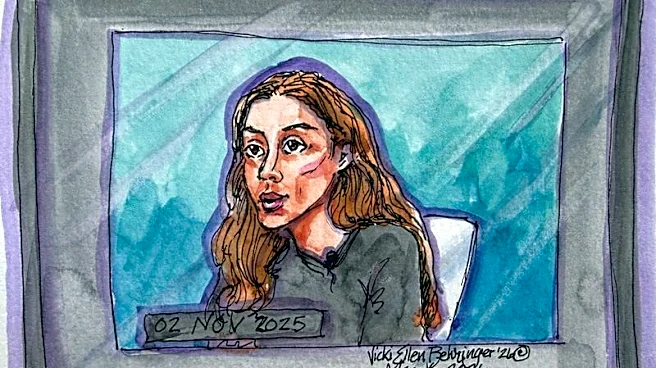
The ongoing trial involving Elon Musk and OpenAI CEO Sam Altman has reached its second week, focusing on Musk's allegations against OpenAI's shift from a nonprofit to a for-profit entity. Shivon Zilis, a former board member of OpenAI and mother of Musk's children,
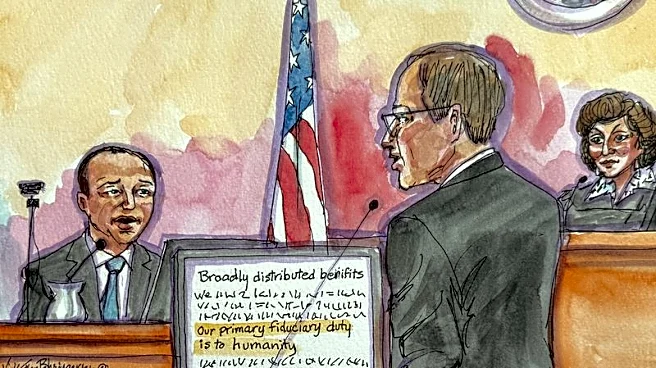
testified in federal court in Oakland, California. Zilis discussed her role as a liaison among Musk, Altman, and other co-founders, detailing the extensive discussions about OpenAI's corporate structure in 2017 and 2018. Musk's lawsuit, filed in 2024, claims that OpenAI's leaders, including Altman and Greg Brockman, reneged on their commitment to maintain the company's nonprofit status. The trial has seen testimonies from several key figures, with more expected, including Microsoft CEO Satya Nadella.
Why It's Important?
This trial underscores significant tensions in the tech industry regarding the balance between profit and ethical commitments, particularly in the rapidly evolving field of artificial intelligence. The outcome could influence how tech companies structure themselves, especially those with a mission-driven focus. For stakeholders, including investors and tech leaders, the case highlights the potential conflicts that can arise when founding visions clash with business realities. The trial's focus on OpenAI's transition to a for-profit model raises questions about the sustainability of nonprofit tech initiatives and the pressures they face to commercialize.
What's Next?
As the trial progresses, further testimonies from high-profile tech executives are anticipated, which could provide more insights into the internal dynamics of OpenAI and its decision-making processes. The court's decision could set a precedent for how similar disputes are handled in the tech industry, potentially affecting future collaborations and partnerships. Stakeholders will be closely watching for any implications on OpenAI's operations and its relationship with major partners like Microsoft.