



What's Happening?
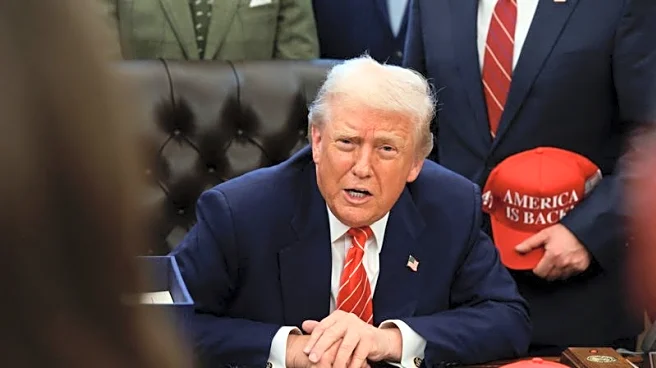
New York Times columnist Andrew Ross Sorkin has raised concerns about the potential for another economic crisis, drawing parallels to the 1929 financial panic. Sorkin highlights the risks posed by artificial intelligence, cryptocurrencies, and unregulated investment firms operating outside the traditional banking system. He suggests that the U.S. economy's stability may hinge on the decisions and financial interests of President Trump, emphasizing the influence of the White House on business activities. Sorkin's insights are part of his new book, which examines the historical context of the Great Depression and its lessons for today's economic challenges.
Why It's Important?
The discussion of potential economic instability is crucial as it underscores the vulnerabilities
in the current financial system. The rise of AI and cryptocurrencies presents new challenges for regulators and policymakers, who must navigate the complexities of these technologies while ensuring financial stability. The influence of unregulated investment firms further complicates the landscape, potentially increasing systemic risks. Sorkin's analysis suggests that the actions of political leaders, particularly President Trump, could significantly impact economic outcomes. This highlights the intersection of politics and economics, where policy decisions can have far-reaching consequences for markets and society.
Beyond the Headlines
The concerns raised by Sorkin also touch on broader ethical and regulatory issues. The rapid advancement of AI and the proliferation of cryptocurrencies pose questions about data privacy, security, and the role of government oversight. As these technologies evolve, there is a need for comprehensive regulatory frameworks that balance innovation with consumer protection. Additionally, the concentration of economic power and decision-making in political hands raises questions about accountability and transparency. These factors contribute to ongoing debates about the future of the financial system and the role of technology in shaping economic policy.