



What's Happening?
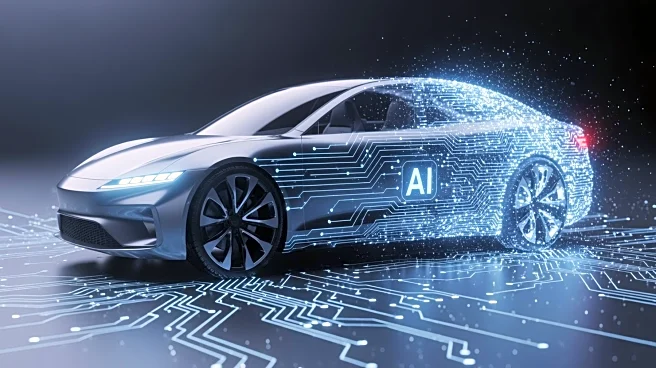
Tesla has announced the discontinuation of its Model S, a vehicle that played a pivotal role in transforming the electric vehicle (EV) market. The decision was revealed during a recent earnings call by Elon Musk, who stated that the company will cease production of the Model S and the Model X SUV to allocate resources towards developing the Optimus humanoid robot. The Model S, introduced in 2012, was instrumental in proving that electric vehicles could be both high-performance and desirable, challenging traditional gasoline-powered cars. Despite its success, the Model S has seen declining sales as Tesla's more affordable models, the Model 3 and Model Y, have gained popularity. This strategic shift marks Tesla's transition from a car manufacturer
to a company focused on artificial intelligence and autonomous technology.
Why It's Important?
The discontinuation of the Model S signifies a major shift in Tesla's business strategy, highlighting the company's pivot towards AI and robotics. This move could have significant implications for the automotive industry, as Tesla has been a leader in the EV market, influencing other automakers to invest heavily in electric and autonomous vehicle technologies. By focusing on AI and robotics, Tesla aims to redefine its market position and potentially lead in new technological domains. This transition also reflects broader industry trends where technology companies are increasingly intersecting with traditional manufacturing sectors. The success or failure of Tesla's new focus could impact investor confidence and shape future innovations in both the automotive and tech industries.
What's Next?
Tesla's decision to focus on AI and robotics suggests that the company will intensify its efforts in developing autonomous vehicles and humanoid robots. The Optimus robot, which Tesla plans to produce, represents a significant leap into uncharted territory, as the technology for fully autonomous robots is still in its early stages. The company will likely face challenges in proving the viability and safety of these technologies at scale. Additionally, Tesla's shift away from traditional car manufacturing may prompt other automakers to reassess their strategies and investments in EVs and autonomous technologies. Stakeholders, including investors and industry competitors, will be closely monitoring Tesla's progress in these new ventures.
Beyond the Headlines
Tesla's move away from car manufacturing to focus on AI and robotics raises questions about the future of the automotive industry and the role of technology companies in shaping it. The Model S not only revolutionized the EV market but also set a precedent for cars as upgradable tech products. This legacy may continue to influence how vehicles are designed and marketed. Furthermore, Tesla's pivot could accelerate the integration of AI in everyday life, potentially leading to ethical and regulatory challenges as society adapts to increased automation. The company's success in this new direction could redefine consumer expectations and drive further innovation across multiple sectors.