






What's Happening?
In the realm of American agriculture, particularly in specialty crops, the integration of physical AI is becoming a crucial factor for the survival of family farms and rural communities. As labor shortages and economic pressures mount, farmers are increasingly
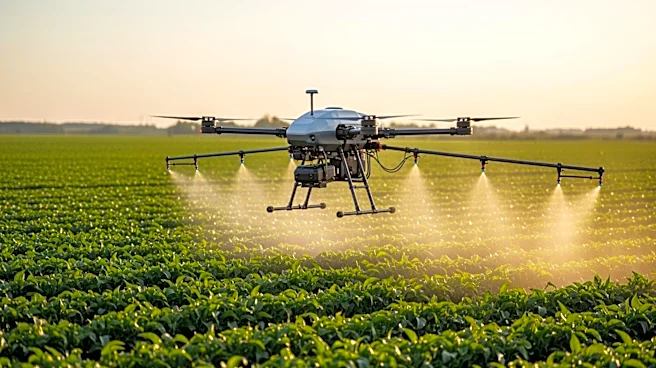
turning to automation to maintain their operations. Companies like Agtonomy, in partnership with equipment manufacturers such as Kubota, are embedding AI technology into agricultural machinery to create autonomous solutions. This approach allows farmers to manage their operations more efficiently without replacing human workers. The focus is on enhancing existing machinery, like the Kubota M5 Narrow diesel specialty tractor, with AI capabilities, enabling a single operator to oversee multiple machines. This technological shift is designed to empower the next generation of farmers by providing them with tools that are intuitive and familiar, akin to using a smartphone.
Why It's Important?
The adoption of physical AI in agriculture is significant as it addresses critical challenges faced by the industry, such as labor shortages and the need for economic sustainability. By integrating AI into farming equipment, the industry can retain its workforce by shifting them into higher-value roles, thus preserving jobs rather than eliminating them. This technological advancement is crucial for ensuring the viability of family farms and supporting rural communities. It also opens opportunities for younger, tech-savvy individuals to engage in agriculture, potentially revitalizing the sector. The move towards automation is not just about efficiency but also about sustaining the agricultural heritage and economic stability of rural America.
What's Next?
As the adoption of physical AI in agriculture reaches a tipping point, the focus will likely shift towards enhancing dealer networks and ensuring interoperability across different equipment brands. Training programs like the Kubota Tech and Engine Academy are essential for preparing the workforce to support these advanced systems. The industry must also foster open collaboration to ensure that different technologies can work together seamlessly. This will involve educating both current and future generations of farmers and technicians to handle increasingly sophisticated equipment. The success of this transition will depend on the industry's ability to integrate these systems into existing workflows and support them through robust dealer networks.
Beyond the Headlines
The integration of physical AI in agriculture has broader implications beyond immediate operational efficiencies. It represents a cultural shift towards embracing technology in traditional industries, potentially altering the landscape of rural communities. This change could lead to a more sustainable agricultural sector that balances technological advancement with the preservation of rural lifestyles. Additionally, the focus on collaboration and interoperability may set a precedent for other industries facing similar challenges, highlighting the importance of strategic partnerships and workforce development in the age of automation.