




What's Happening?
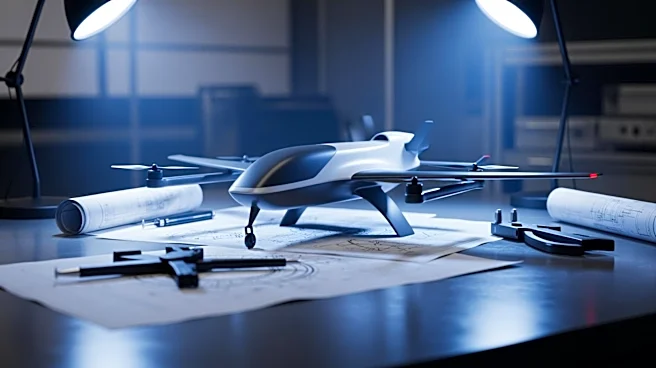
Aurora Flight Sciences, a subsidiary of Boeing, has played a crucial role in the successful first flight of Wisk Aero's Generation 6 autonomous aircraft. This milestone marks a significant step towards the certification of the first FAA-approved commercial
autonomous passenger aircraft. Aurora provided extensive engineering expertise, including battery development, flight physics, and materials processing. The flight involved vertical takeoff, hovering, and stabilized maneuvers, showcasing the aircraft's capabilities. Aurora's contributions were pivotal in ensuring the performance and safety of the battery system, as well as the aerodynamic stability and control of the aircraft. The company's expertise in Guidance, Navigation, and Control (GNC) was essential for the precision required in autonomous flight and landing.
Why It's Important?
The successful first flight of Wisk's Generation 6 aircraft represents a major advancement in the field of autonomous aviation. This development could pave the way for the introduction of all-electric, autonomous air taxis, potentially transforming urban transportation. The collaboration between Aurora Flight Sciences and Wisk Aero highlights the importance of engineering innovation in achieving regulatory milestones. The project not only demonstrates the feasibility of autonomous passenger aircraft but also sets a precedent for future developments in the aviation industry. The potential for reduced emissions and increased efficiency in urban transport could have significant environmental and economic benefits.
What's Next?
Aurora Flight Sciences will continue to collaborate with Wisk Aero on the ongoing flight test program. The focus will be on validating the design, simulation models, and performance of the Generation 6 aircraft. As the project progresses, further testing and refinement will be necessary to achieve full FAA certification. The success of this program could lead to increased interest and investment in autonomous aviation technologies, potentially accelerating the development of similar projects worldwide. Stakeholders in the aviation industry, including regulatory bodies and urban planners, will be closely monitoring the outcomes of these tests.