




What's Happening?
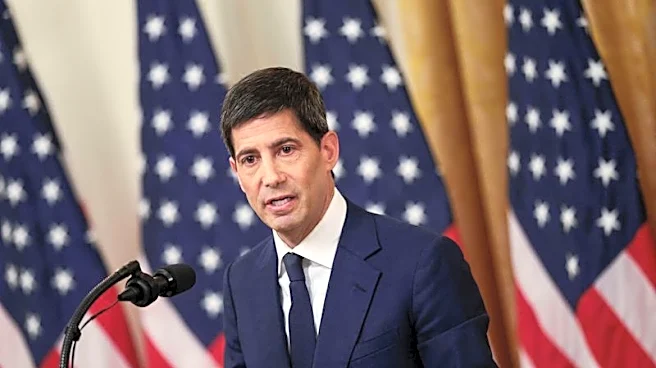
The Federal Reserve's new chief, Kevin Warsh, is confronted with a significant challenge as the latest inflation report reveals consumer prices in April reached their highest level in nearly three years. The personal consumption expenditures price index,
the Fed's preferred measure of inflation, rose to an annual rate of 3.8%, up from 3.5% in March. This increase is largely attributed to rising energy costs due to the ongoing conflict in Iran. The report also highlights that core PCE, excluding volatile food and energy prices, rose by 3.3% annually. The inflation surge complicates the Fed's earlier forecast of a potential interest rate cut in 2026, with economists now considering a rate hike more likely. President Trump has expressed a desire for lower borrowing costs to stimulate economic growth, adding pressure on Warsh's decision-making.
Why It's Important?
The rise in inflation poses a significant challenge for the Federal Reserve as it navigates monetary policy under new leadership. The increase in consumer prices affects purchasing power, with personal income growth lagging behind inflation, leading to reduced consumer confidence. The potential for an interest rate hike could impact borrowing costs for consumers and businesses, affecting economic growth. The situation is further complicated by geopolitical tensions, particularly the Iran conflict, which has driven energy prices higher. The Fed's response to these challenges will be crucial in managing inflation expectations and maintaining economic stability.
What's Next?
Economists are closely monitoring the Federal Reserve's next moves, with a 40% probability of a rate hike at the December meeting, up from 3% in June. The Fed's decision will depend on future inflation data and economic indicators. The central bank's approach to balancing inflation control with economic growth will be critical, especially with President Trump's push for lower borrowing costs. The ongoing geopolitical tensions and their impact on energy prices will also play a significant role in shaping the Fed's policy decisions.