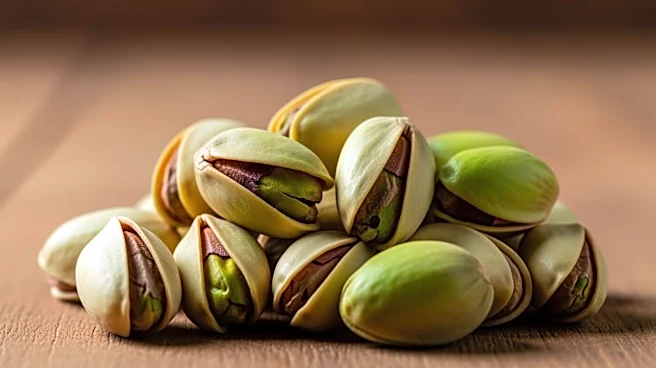







What's Happening?
The pistachio market is experiencing significant pressure due to a combination of high demand and geopolitical tensions. The popularity of Dubai chocolate, which gained fame on social media, has driven up global demand for pistachios, leading to a 30%
increase in commodity prices. Meanwhile, the conflict in Iran, a major pistachio producer, has disrupted exports, adding to logistical challenges. Although the U.S. and Turkey also reported lower-than-expected harvests, the situation has not yet resulted in a definitive shortage. However, market players are preparing for potential supply constraints in the upcoming seasons.
Why It's Important?
The pistachio market's current challenges highlight the interconnectedness of global supply chains and the impact of geopolitical events on commodity prices. The increased demand driven by social media trends underscores the influence of consumer behavior on agricultural markets. The conflict in Iran exacerbates existing logistical issues, potentially affecting global supply and pricing. As major producers face reduced yields due to climate change and geopolitical tensions, stakeholders in the pistachio industry must navigate these complexities to ensure supply chain resilience. The situation serves as a reminder of the need for diversified sourcing and strategic planning in the face of unpredictable market forces.
What's Next?
As the pistachio market braces for potential shortages, industry stakeholders are likely to explore alternative sourcing strategies and invest in supply chain resilience. The ongoing conflict in Iran and climate-related challenges may prompt producers to seek new markets or invest in sustainable agricultural practices. Additionally, the influence of social media on consumer demand could lead to increased marketing efforts and product innovation. Monitoring geopolitical developments and climate conditions will be crucial for market players to anticipate and mitigate potential disruptions. The industry's response to these challenges may shape future strategies for managing supply and demand in agricultural markets.