
What's Happening?
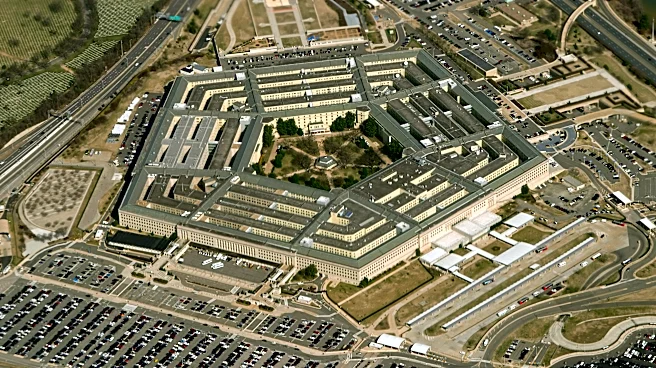
Eight major technology companies, including Google, Nvidia, and SpaceX, have entered into agreements with the Pentagon to deploy artificial intelligence (AI) technologies aimed at enhancing the U.S. military's
capabilities. The Department of Defense announced that these partnerships are part of a broader strategy to establish the U.S. military as an AI-first fighting force, thereby improving decision-making across various domains of warfare. The AI technologies will be integrated into the Pentagon's classified networks for lawful operational use. Other companies involved in these agreements include OpenAI, Microsoft, Amazon Web Services, Oracle, and AI startup Reflection. Despite the strategic importance of these collaborations, there has been internal dissent within some companies, such as Google, where employees have expressed concerns over the potential misuse of AI in military applications.
Why It's Important?
The collaboration between leading tech companies and the Pentagon underscores the growing role of AI in national defense strategies. By leveraging advanced AI technologies, the U.S. military aims to maintain a competitive edge in global military operations. This development is significant as it highlights the intersection of technology and defense, raising questions about the ethical implications of AI in warfare. The involvement of major tech firms also reflects a shift in how these companies are engaging with government agencies, potentially influencing future policies and regulations regarding AI use in military contexts. The agreements could lead to advancements in military technology, but they also bring to the forefront concerns about privacy, surveillance, and the ethical use of AI.
What's Next?
As these agreements progress, the Pentagon and the involved tech companies will likely face scrutiny from both internal stakeholders and external observers. The companies will need to navigate the ethical and legal challenges associated with deploying AI in military settings. Additionally, the Pentagon's decision to diversify its partnerships following a dispute with Anthropic suggests a strategic move to mitigate risks associated with relying on a single provider. Future developments may include the formalization of contracts and the establishment of guidelines to ensure that AI technologies are used in compliance with civil liberties and constitutional rights. The ongoing dialogue between tech companies and the Pentagon will be crucial in shaping the future of AI in defense.