



What's Happening?
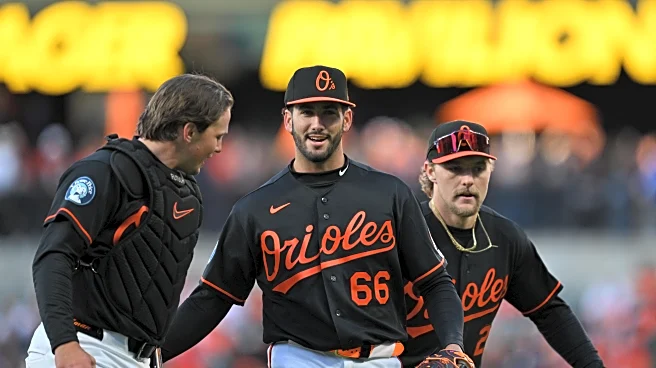
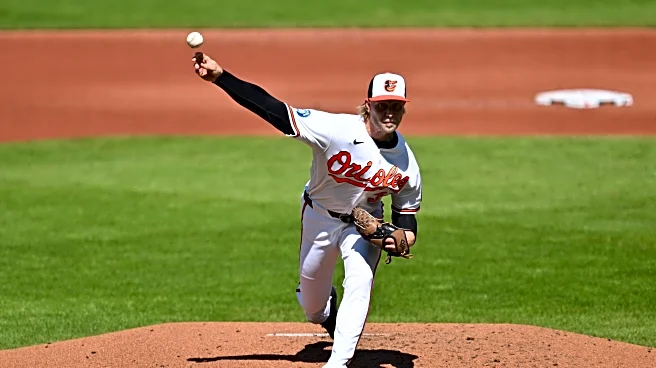
During a Major League Baseball game between the Minnesota Twins and Baltimore Orioles, Twins manager Derek Shelton was ejected after a heated argument with umpires over the new Automated Ball-Strike (ABS) system. The incident occurred when Orioles pitcher
Ryan Helsley challenged a pitch call using the ABS, which overturned the original call and denied the Twins a chance to load the bases. Shelton's frustration stemmed from his belief that Helsley did not request the challenge in time. The ABS, which uses 12 computer-driven cameras to analyze the strike zone, was officially introduced during the MLB season opener, allowing players to contest home-plate calls.
Why It's Important?
The introduction of the ABS system marks a significant shift in how baseball games are officiated, potentially altering the dynamics of the sport. This technology aims to reduce human error in pitch calls, but it also introduces new challenges and controversies, as seen in Shelton's ejection. The system's impact on the fan experience and game strategy could be profound, as it adds a layer of technological intervention in a traditionally human-judged aspect of the game. The incident highlights the growing tension between traditional baseball practices and modern technological advancements.
What's Next?
As the ABS system becomes more integrated into MLB games, teams and players will need to adapt to its presence. The league may face additional scrutiny and feedback from players, managers, and fans regarding the system's implementation and its effect on the game. Future adjustments to the system or its rules may be necessary to address concerns and improve its functionality. The MLB will likely monitor the system's impact closely and consider feedback from various stakeholders to refine its use in the sport.