



What's Happening?
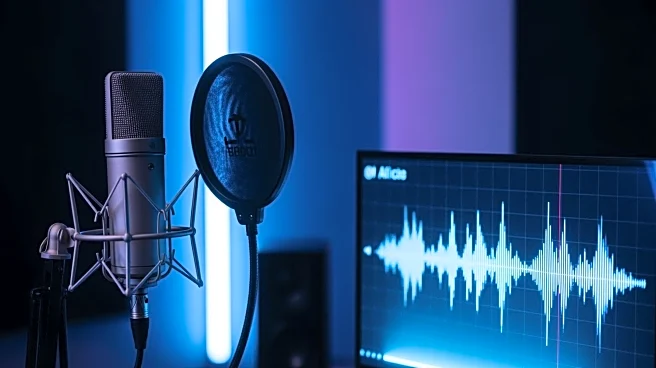
Spines, an AI-powered self-publishing platform, has launched a new feature that allows authors to create audiobooks using voice cloning technology. This innovation enables authors to produce full-length audiobooks narrated in their own voice by providing just 33 minutes of audio samples, a significant reduction from the traditional 40-plus hours required for studio recording. The platform, which began as a spinoff of Niv Publishing in 2021, automates various aspects of publishing, including editing, proofreading, cover design, marketing, and distribution. Spines has expanded its services to include AI-assisted proofing and translation into seven languages, aiming to broaden authors' reach. The company has attracted backing from notable investors
like Oren Zeev, who sees Spines as having the potential to transform the book publishing industry.
Why It's Important?
The introduction of AI-powered voice cloning by Spines represents a significant advancement in the publishing industry, particularly for audiobooks. This technology reduces the time and labor traditionally required for audiobook production, making it more accessible for authors to narrate their own works. By automating multiple publishing processes, Spines not only enhances efficiency but also reduces costs, potentially democratizing access to publishing for a wider range of authors. The expansion into multiple languages through AI-human hybrid translation services further increases the global reach of authors, allowing them to tap into new markets and audiences. This could lead to a shift in how content is produced and consumed, with AI playing a central role in the future of publishing.
What's Next?
As Spines continues to develop its AI capabilities, the publishing industry may see further integration of technology in content creation and distribution. The success of Spines' voice cloning and translation services could prompt other companies to adopt similar technologies, leading to increased competition and innovation in the sector. Authors and publishers might explore new ways to leverage AI to enhance storytelling and audience engagement. Additionally, the growing acceptance of AI-generated content could influence consumer expectations and preferences, potentially reshaping the landscape of the publishing industry.
Beyond the Headlines
The use of AI in publishing raises important ethical and quality considerations. While AI can significantly reduce production time and costs, there is a risk of compromising the quality and authenticity of content. Ensuring that AI-generated translations and voice models maintain the original intent and tone of the work is crucial. Moreover, the reliance on AI for creative processes may spark debates about the role of human creativity in art and literature. As AI continues to evolve, the industry will need to address these challenges to balance technological advancement with artistic integrity.