



What's Happening?
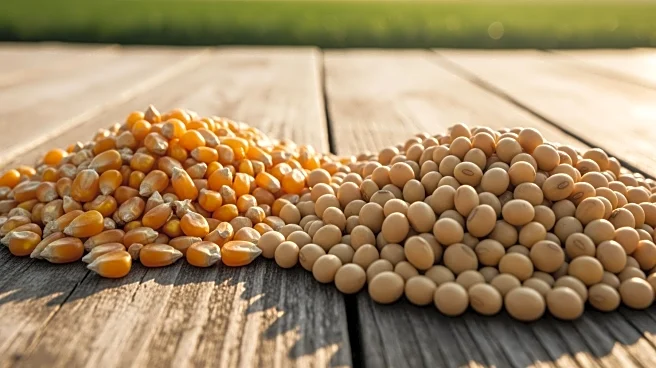
The U.S. Department of Agriculture (USDA) has released its Grains and Oilseeds Outlook for the 2026/2027 crop year, forecasting a shift in planting patterns among U.S. farmers. The report indicates a reduction in corn acreage to 94 million acres, a decrease of 4.8 million acres from the previous year, while soybean acreage is expected to rise due to stronger profitability and crop rotations. The USDA projects a corn crop of 15.8 billion bushels, down 7% from the prior year, with total corn supplies forecasted at 17.9 billion bushels. In contrast, soybean production is anticipated to increase by 5%, with a projected yield of 53 bushels per acre, resulting in 4.45 billion bushels. The report also highlights the role of biofuels in driving demand
for soybean oil.
Why It's Important?
This shift in crop acreage reflects broader economic and environmental factors influencing U.S. agriculture. The decrease in corn planting is attributed to lower profitability and ample supplies from previous record crops, while the increase in soybean acreage is driven by higher profitability and demand for biofuels. This change could impact the agricultural economy, affecting prices, exports, and the balance of supply and demand. Farmers may face challenges in adapting to these shifts, particularly in managing input costs and market volatility. The report's projections also underscore the importance of biofuels in shaping agricultural markets, with potential implications for energy policy and environmental sustainability.
What's Next?
Farmers and industry stakeholders will need to monitor market conditions and policy developments closely. The USDA's projections may influence planting decisions and investment in agricultural technologies. Additionally, geopolitical factors, such as trade relations with China and other major importers, could affect export opportunities and market dynamics. The agricultural sector will also need to consider environmental factors, such as climate change and soil health, in planning for future crop years. Policymakers may need to address these challenges through support programs and incentives to ensure the sustainability and competitiveness of U.S. agriculture.