
What's Happening?
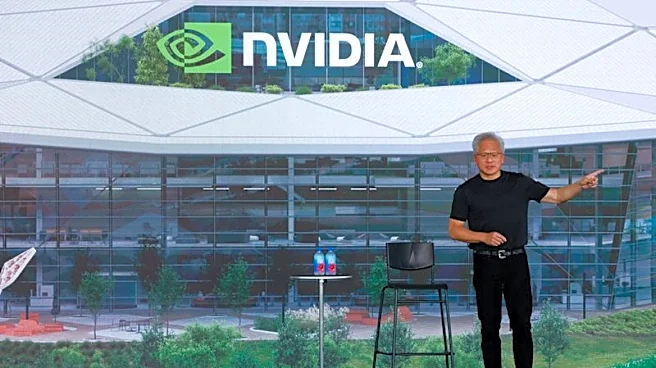
Nvidia's CEO, Jensen Huang, has publicly urged Super Micro Computer to improve its compliance efforts following the detention of three individuals by Taiwanese authorities. These individuals are accused
of making fraudulent declarations related to AI servers containing Nvidia chips. Huang emphasized Nvidia's commitment to regulatory compliance and expressed hope that Super Micro would enhance its procedures to prevent future issues. This call to action comes amid increasing U.S. government scrutiny over AI hardware exports to China, with strict controls being imposed on high-end AI chips. The U.S. Justice Department has charged individuals connected to Super Micro with smuggling $2.5 billion worth of AI technology into China. Super Micro, which assembles servers using Nvidia's processors, has stated its commitment to protecting U.S. technologies and intellectual property.
Why It's Important?
The situation highlights the growing tension between the U.S. and China over technology exports, particularly in the AI sector. As the U.S. tightens export controls, companies like Nvidia and Super Micro are under pressure to ensure compliance with trade regulations. This has significant implications for the tech industry, as non-compliance could lead to legal repercussions and impact business operations. The scrutiny also reflects broader geopolitical dynamics, where technology transfer and intellectual property protection are critical issues. For Nvidia, maintaining compliance is crucial to preserving its market position and avoiding potential penalties. For Super Micro, enhancing compliance is essential to continue benefiting from the AI infrastructure boom without legal entanglements.
What's Next?
As the U.S. continues to enforce strict export controls, companies involved in AI technology will likely face increased regulatory scrutiny. Nvidia and Super Micro may need to implement more robust compliance measures to align with U.S. trade policies. This could involve revising internal processes and enhancing collaboration with regulatory bodies. The situation may also prompt other tech companies to reassess their compliance strategies to avoid similar issues. Additionally, the ongoing U.S.-China tech tensions could lead to further policy changes, impacting global supply chains and market dynamics in the semiconductor industry.