




What's Happening?
Amid rising gasoline prices, American consumers are increasingly turning to hybrid vehicles rather than fully electric ones. According to Motor Intelligence, hybrid vehicle sales in the U.S. rose by 37% in the two months following the onset of the Middle
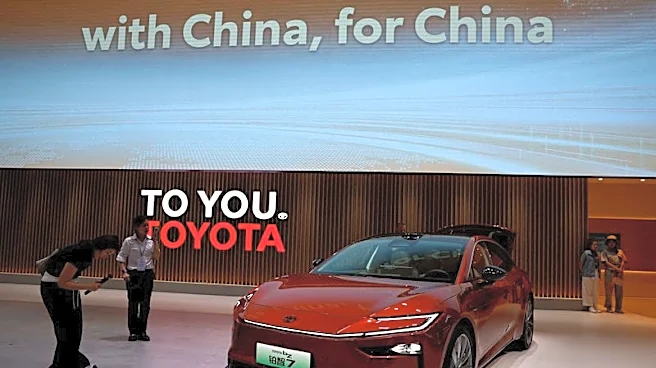
East conflict in late February, significantly outpacing the 15% increase in overall vehicle sales. In contrast, electric vehicle (EV) sales grew by only 11% during the same period. This trend diverges from Europe, where EV demand has surged. In the U.S., hybrids offer a compromise, providing fuel savings without the lifestyle changes associated with EV ownership, such as installing home chargers. Toyota, with its extensive hybrid lineup, has been a major beneficiary, seeing a 34% rise in electrified sales.
Why It's Important?
The shift towards hybrid vehicles highlights consumer preferences for cost-effective and convenient solutions amid high fuel prices. This trend suggests that while environmental concerns are significant, practical considerations like cost and convenience remain paramount for many U.S. consumers. The preference for hybrids over EVs indicates potential challenges for the EV market, which may need to address issues such as infrastructure and cost to increase adoption. The automotive industry may need to adjust strategies to cater to consumer demand for hybrids, impacting production and marketing efforts. This shift also reflects broader economic pressures, as consumers seek to balance environmental responsibility with financial constraints.
What's Next?
Automakers may continue to expand their hybrid offerings to meet growing consumer demand. The trend could influence future automotive industry strategies, with a potential increase in hybrid model availability and marketing efforts. Policymakers might also consider incentives to encourage EV adoption, addressing infrastructure and cost barriers. The ongoing geopolitical situation and its impact on fuel prices will likely continue to influence consumer behavior, with potential implications for the automotive market and environmental policy. As the situation evolves, stakeholders will need to monitor consumer preferences and adjust strategies accordingly.